I had been hiking for a while now. The ambient temperature was 14° F (-10° C), which was comfortable. A few years ago my outdoor wardrobe experienced some natural base layer enhancement courtesy of merino wool, which is a miracle fiber. Like your garden variety wool it insulates even when wet, but against the skin it does not itch and feels like fleece. Inexplicably it can also stave off odors for a remarkable amount of time, and it breathes extraordinarily well. I was glad to have my Icebreakers on this occasion. Incidentally, if you are one of my fly fishing readers, merino socks by this company are the dog's bollocks (meaning badass in the UK) for cold weather wading.
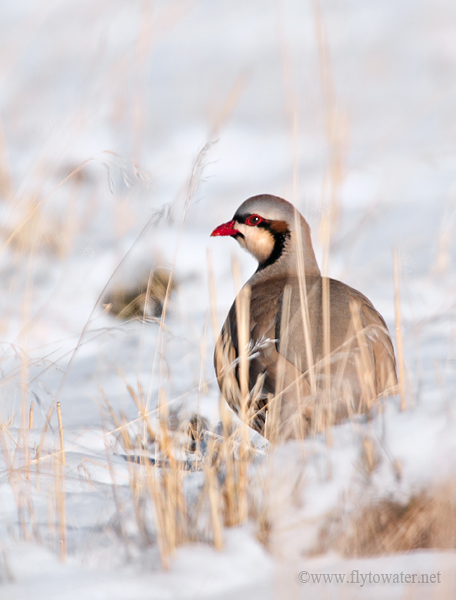
Chukar partridge were my goal for the day. Early in the Fall it's often possible to locate a covey by listening for calls, but typical of this time of year it was dead quiet. Wild birds soon realize their chatter is giving them away, and they start dishing out the silent treatment.
Hiking in the steep, rocky talus that chukars love with a 14-pound camera rig offers a pucker factor of about 9.0. Opportunities can be so unexpected and fleeting, I've never been able to successfully make use of a tripod, monopod, harness, or pack. It's all free-hand. At double the weight of a typical shotgun, and with the awkward size/shape of a big telephoto, the visual is like watching someone Riverdance on a cliff face while cradling a huge baby.
Presently due to insubordination on the part of my pulmonary system I stopped to catch a breather in a large boulder field. About 3 weeks ago I acquired the felicity of walking pneumonia and am still feeling the effects. After a minute or two, what I can only describe as a chukar whisper seemed to emanate from the rocks to my immediate left. The sound was barely audible, and far more subdued than I had ever heard before. My thought was that the call must have been more distant and I'd experienced a sound effect in the strewn boulders.
Following a few seconds of questioning the wisdom of combining thin air with cough syrup, I heard it again - "chuk-chuk." There were partridge about, and they were close. Really close - within feet. Over the last 25 or so years, I've hiked, hunted, scouted, and photographed in chukar habitat hundreds of times, and I can't say that I've ever managed to get nearer than 15 yards. Until now.
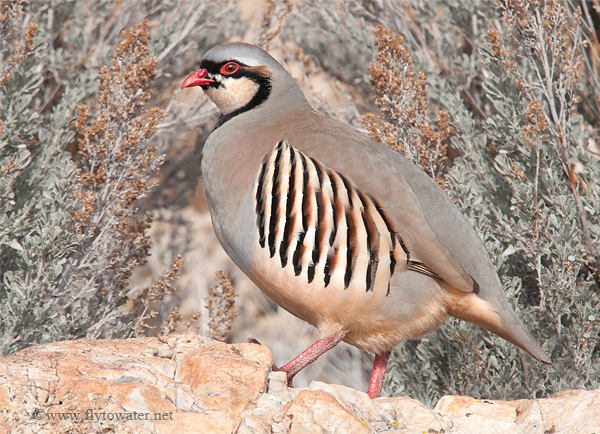
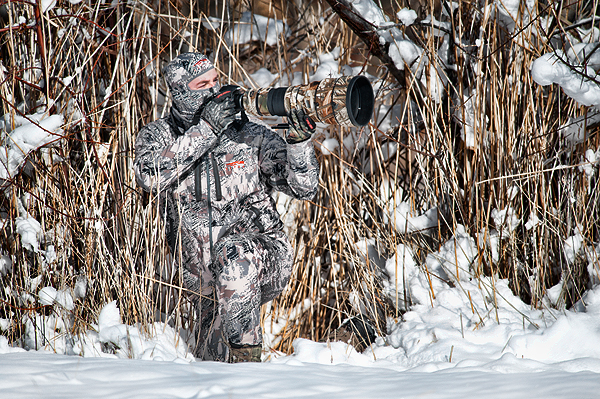
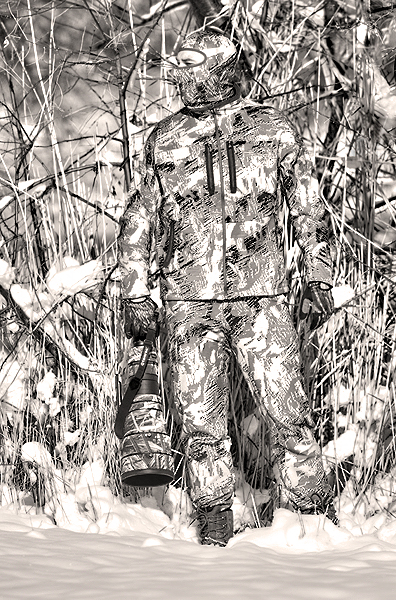
18 feet in front of me a mature, well-marked bird hopped up on a rock and was positioned ideally to catch the morning sun. Had I not been forewarned by the muted calls, which enabled me to raise my lens just in time, I have no doubt a flush would have been instantaneous. As it was, I captured a short series of images from spitting distance. At this range I believe my Sitka Gear Open Country camouflage probably made a huge difference, allowing me blend in under point blank scrutiny.
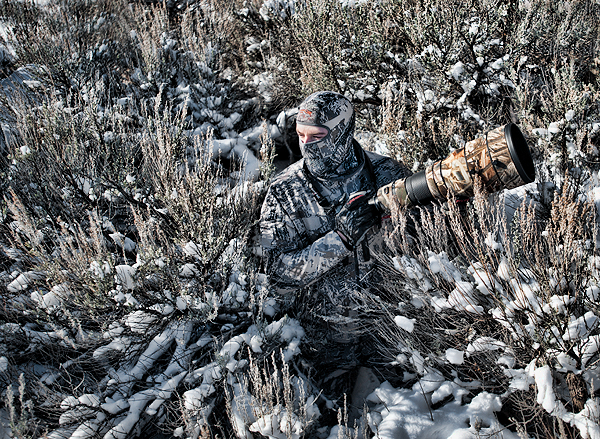
This was a great way to finish out 2011 - with a humbling opportunity that I was privileged to see through the viewfinder.
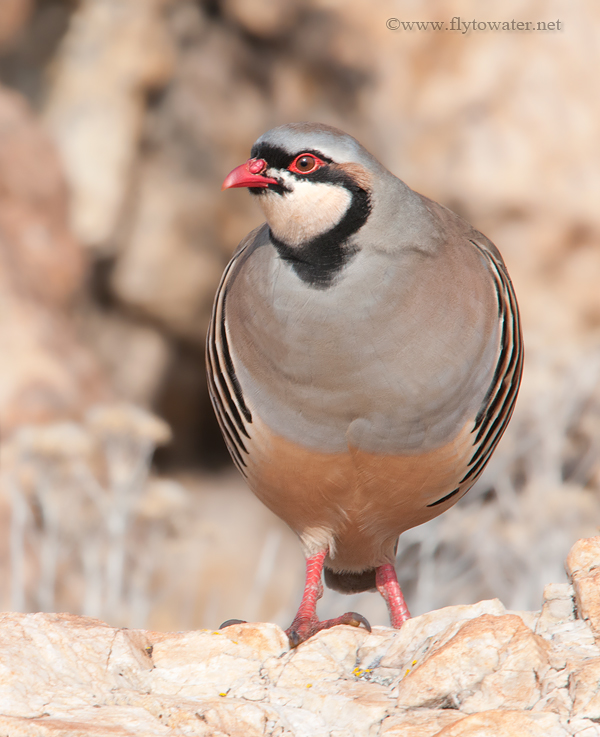
Nikon D300
Nikon 400mm f/2.8 VR - f/8, 1/320, ISO 400
Distance to Subject - 6 Yards/18 Feet
Showing posts with label Camouflage. Show all posts
Tuesday, December 27, 2011
Devil Birds
Sunday, January 2, 2011
First Click - 2011
By way of follow up to my last blog post, I've received a lot of e-mail asking for specific tips about photographing game birds, such as the chukar partridge.
I wish I could say it was as easy as picking up a 600mm f/4 lens with a nice window mount, whereupon it becomes immediately possible to capture 5-star images from your climate-controlled SUV.
If it's been a while since you've...
The basic recipe for success:
Scouting: The process begins with a scouting trip (or trips) into likely habitat. It's important to locate game birds without disturbing them initially, at least if photography is on the agenda. A decent pair of binoculars and a spotting scope are great tools that help cover a lot of country.
Patterning: Once you have located a population of birds, you want to watch them for a while. It's quite common for these animals to have a routine. You may find a watering hole, food source, spot where the sun hits first thing in the morning, or travel route that game birds use regularly. During this period of observation, you want to take note of lighting conditions and possible hiding spots. Typically you will want to be in a position where your subject is being lit from the front or side, which needs to be taken into account.
Concealment: While non-avian predators and most big game animals see primarily in black and white, birds see in color. Camouflage becomes an important accessory, and it's a good idea to have a few options available to match various types of terrain. My favorite for chukar habitat is the Open Country lineup from Sitka Gear. This pattern has been specifically designed and researched based on how animals see, as opposed to most products that are based on human vision.
I also use a LensCoat to hide the hardware. These are made of neoprene and also provide some protection from dings and scratches in addition to breaking up the outline of the equipment. LensCoat products are available for a wide variety of common camera lenses.
Waiting: Get into position prior to the time you have observed birds using the location in your scouting. In my experience, wind is less of a factor with birds than it is with mammals. Make sure to dress warmly in cold temperatures, because sitting around doesn't create a lot of body heat. Stay alert and be opportunistic - things will usually not unfold exactly as planned. Knee pads are a good accessory in rocky terrain in case you have to move around while keeping a low profile.
That's the basic formula. Lather, rinse, and repeat.
Thanks to JayMorr, who took the portraits of me used in this post. His blog has additional images and comments about getting TO the shot, which is the main ingredient in getting the shot when it comes to critters.
I wish I could say it was as easy as picking up a 600mm f/4 lens with a nice window mount, whereupon it becomes immediately possible to capture 5-star images from your climate-controlled SUV.
If it's been a while since you've...
- Gone out in temperatures cold enough to freeze the balls off a brass monkey
- Done a "1-legger" down a 3-foot-deep rock fissure drifted over by snow, nearly breaking an ankle in the process
- Torn your trapezius
- Sat motionless until cramps were galloping up your legs like Charlton Heston's chariot in the movie Ben-Hur
The basic recipe for success:
Scouting: The process begins with a scouting trip (or trips) into likely habitat. It's important to locate game birds without disturbing them initially, at least if photography is on the agenda. A decent pair of binoculars and a spotting scope are great tools that help cover a lot of country.
Patterning: Once you have located a population of birds, you want to watch them for a while. It's quite common for these animals to have a routine. You may find a watering hole, food source, spot where the sun hits first thing in the morning, or travel route that game birds use regularly. During this period of observation, you want to take note of lighting conditions and possible hiding spots. Typically you will want to be in a position where your subject is being lit from the front or side, which needs to be taken into account.
Concealment: While non-avian predators and most big game animals see primarily in black and white, birds see in color. Camouflage becomes an important accessory, and it's a good idea to have a few options available to match various types of terrain. My favorite for chukar habitat is the Open Country lineup from Sitka Gear. This pattern has been specifically designed and researched based on how animals see, as opposed to most products that are based on human vision.
I also use a LensCoat to hide the hardware. These are made of neoprene and also provide some protection from dings and scratches in addition to breaking up the outline of the equipment. LensCoat products are available for a wide variety of common camera lenses.
Waiting: Get into position prior to the time you have observed birds using the location in your scouting. In my experience, wind is less of a factor with birds than it is with mammals. Make sure to dress warmly in cold temperatures, because sitting around doesn't create a lot of body heat. Stay alert and be opportunistic - things will usually not unfold exactly as planned. Knee pads are a good accessory in rocky terrain in case you have to move around while keeping a low profile.
That's the basic formula. Lather, rinse, and repeat.
Thanks to JayMorr, who took the portraits of me used in this post. His blog has additional images and comments about getting TO the shot, which is the main ingredient in getting the shot when it comes to critters.
Labels:
Bird,
Camouflage,
Chukar,
Gear,
Outdoor,
Partridge,
Photographer,
Photography,
Sitka,
Wildlife
Subscribe to:
Posts (Atom)