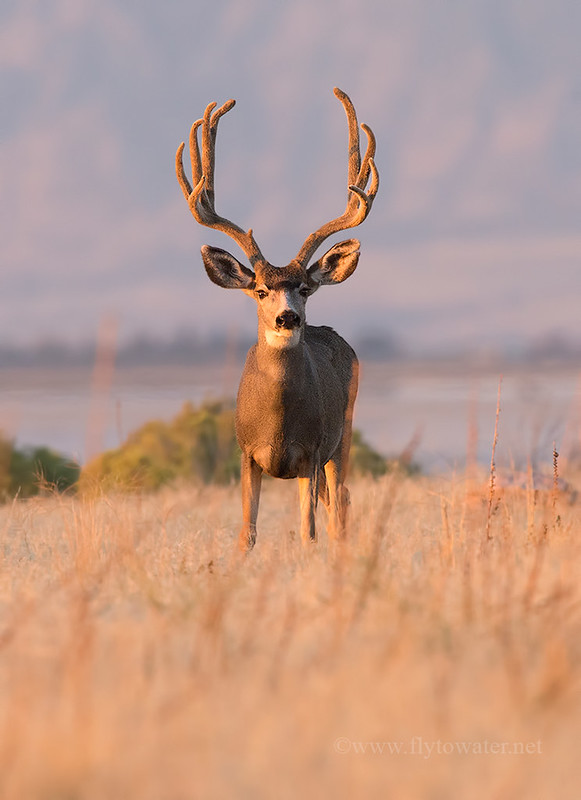
Things that fly often give you the bird. It's really that simple. Over the years I've come to the realization that photography is primarily about recognizing opportunities. Many times I leave the house with a certain vision or objective in mind, only to discover that the conditions or subject matter simply do not lend themselves to success.
It is during these times that it's critical to see what IS there, and take what the defense gives you.
This year it has been extremely difficult locating eagles. The birds have been unpredictable, moving significant distances from day to day. With the onset of some excellent evening light, we decided to chase northern harriers. Getting to within 25 yards of a wild harrier (about the maximum distance which will yield a detailed image) usually involves enough waiting to make Rip van Winkle appear slapdash by comparison.
JayMorr captured a spectacular image of an elusive male this week, well worth checking out on his blog. He also sniped a shot of me on the boomstick (Nikon 400mm f/2.8 VRII).
I got a few images of a female, who made a single 3-second flyby within range.
Monday, February 1, 2010
Sunday, January 31, 2010
Sleeping in the Dirt Magazine
If you haven't already seen the premier issue of Aaron Otto's online magazine Sleeping in the Dirt, make sure to pay a visit. No advertisements, just eye candy. Pages 12-14 feature a few images of my tarpon trip to Mexico. Thanks for the spread AO!
Click on the image to view the magazine.
Sunday, January 24, 2010
Talon Scout
Birds are a photographer's night sweat-inducing nemesis. All species delight in flitting about at extreme distances, later appearing in pictures as black specs nearly concealed by the curvature of the Earth. The mere mention of the word "birds" also tends to cause the onset of an inscrutable smile for those retailing or manufacturing camera lenses the size of the Giant Magellan Telescope.
Eagles are somewhat of a rarity in the Salt Lake area. Like most places out West the occasional sighting is not entirely uncommon. Ordinarily, however, the chances of actually photographing them are on par with locating a Blue Footed Booby.
All this changes for a short 2-3 week period in the dead of winter, when large numbers of migratory bald eagles use the wetlands of the Wasatch Front as a layover. Apparently there are much more raptor-friendly locations farther to the North, offering something called "heavy beer" as an attractant.
I haven't seen the heaviest buildup yet, but a few birds have started to arrive. Here are a couple images from this weekend's scouting trip:
I also have a fondness for the kestrel, although their tiny size often makes them a photographer's bane. On Saturday this one was cooperative for a short period:
Keep your lap dogs inside the ride at all times folks, baldies love a nice Maltese chaser after a fish dinner.
Eagles are somewhat of a rarity in the Salt Lake area. Like most places out West the occasional sighting is not entirely uncommon. Ordinarily, however, the chances of actually photographing them are on par with locating a Blue Footed Booby.
All this changes for a short 2-3 week period in the dead of winter, when large numbers of migratory bald eagles use the wetlands of the Wasatch Front as a layover. Apparently there are much more raptor-friendly locations farther to the North, offering something called "heavy beer" as an attractant.
I haven't seen the heaviest buildup yet, but a few birds have started to arrive. Here are a couple images from this weekend's scouting trip:
I also have a fondness for the kestrel, although their tiny size often makes them a photographer's bane. On Saturday this one was cooperative for a short period:
Keep your lap dogs inside the ride at all times folks, baldies love a nice Maltese chaser after a fish dinner.
Labels:
Bald Eagle,
Bird Photography,
Brett Colvin,
Farmington Bay,
Flight,
kestrel
Tuesday, January 19, 2010
Midcurrent Featured Photographer
Many thanks to Marshall Cutchin and Tim Romano for featuring my photography on MidCurrent, which is one of the world's largest providers of fishing news, media, and techniques. It's an honor considering the guys who have been featured previously are some of the best in the biz.
Click on the photo to view the page.
Labels:
Brett Colvin,
fly fishing photography,
Midcurrent
Thursday, January 14, 2010
Cover Shots
The cover shot of a major publication has long been considered one of the crowning achievements in commercial photography. Recently a group of photographers that participate in the Itinerant Angler Online Forum had the chance to receive feedback from Phil Monahan (long-time editor of American Angler magazine and a past editor at Outdoor Life) about how these types of photographs are selected.
Phil shared a wealth of information about the characteristics of successful cover images, many of which are not readily apparent.
The session with Phil has been made available as a podcast/MP3. The audio portion is accompanied by an online slideshow demonstrating the various unique considerations of cover work. One of my images is contained in the presentation, and I learned a lot from Phil's insight.
Check out the ITINERANT ANGLER PODCAST for links to the audio/visual materials in the Cover Shot Extravaganza section.
Phil shared a wealth of information about the characteristics of successful cover images, many of which are not readily apparent.
The session with Phil has been made available as a podcast/MP3. The audio portion is accompanied by an online slideshow demonstrating the various unique considerations of cover work. One of my images is contained in the presentation, and I learned a lot from Phil's insight.
Check out the ITINERANT ANGLER PODCAST for links to the audio/visual materials in the Cover Shot Extravaganza section.
Monday, January 4, 2010
Devil's Gold
If you're in the mood for a sick short on golden dorado (and honestly who isn't?) then check out Issue #9 of Catch Magazine.
When the thumbnails load, scroll forward a few pages to the table of contents, then click on the Devil's Gold entry.
Labels:
Castaway Films,
Catch Magazine,
Devil's Gold,
Grant Wiswell
Wednesday, December 30, 2009
Backcasts
Most fly fisherman have what could be described as a fair amount of gear. In other words, roughly 1 cubic hectare, most of which is compacted through the miracles of spousal concealment into 1,500 square feet of garage/basement/offsite storage.
Without looking like you’ve got an adolescent pachyderm strapped precariously to your back, not all gear can be taken on all trips. Invariably favorites emerge and receive heavy use, while other equipment (possibly “specialized”) simply provides comfort to the angler’s soul through existence within the stash.
What follows is a list of my regulars from 2009. I’m interested in hearing from everyone about their favorite swag that has proven itself on the water. Drop me a line if you have anything you won’t leave home without.
Sage 2500 Series
The reels I’ve cranked the most in 2009 have been Sage’s outgoing lineup, and I’ve used the 2540, 2550, and 2560 in all manner of conditions. This series offers an o-ring sealed drag, which is numbered for exact repeatability. As the British would say, this feature is “the dog’s bollocks.” Figuratively this means the pinnacle of coolness; you can disregard the literal translation. The knurled drag knob is ideally tensioned so as not to be changed inadvertently. Converting from right to left hand retrieve is as easy as any reel I’ve tried, and the large arbor helps limit line memory and makes uptake a breeze.
As of Christmas, 2500 reels are getting harder to find. Red Truck Flyfishing still has the limited edition green 2550 for 5/6 weight lines at $210. These originally sold for $375 and the spools are fully interchangeable with the new 4500 series which offers both carbon and aluminum options. This means no problems with an orphaned body anytime soon.
Outcast PAC 9000 Pontoon Boat
I have spent a considerable amount of time on stillwater in all manner of buoyant contrivances. To date, my favorite craft is the PAC 9000, bar none. This remains one of the most expensive options for those in the market for a ‘toon, but it really does perform in a class by itself.
The quad 10” diameter pontoons keep a shallow draft, provide a flat surface for gear, dramatically improve stability, track like an arrow, and provide redundancy. There are many quads on the market, but few with such a low profile. In addition there is something ingenious about the strapless frame system of the PAC 9000.
Even Outcast’s own line of less expensive quad models fails to track as cleanly or as directly as the flagship. I believe this has something to do with the tension of strap mounts along with weight distribution, but the result is superb handling. The PAC 9000 is available at River Bum or your nearest Outcast dealer.
Galvan Fly Reels
During 2009 I have landed everything from brook trout to tarpon on Galvan’s Torque and Spoke fly reels. At no time have I been disappointed, and Galvan’s products are designed and manufactured in the USA.
The Torque and Spoke are exceptionally light for aluminum reels, enabling them to be used across 3 or 4 rod weights to maximize your investment. These models use the same drag design, which has nice detents and makes a muted, single-pawl click when advancing line. Changing from right to left hand retrieve is easy, and spool removal is such a snap it can be done one-handed. I slightly prefer the drag knob of the Torque, especially if using gloves. The Spoke is lighter, and the visual design is first rate.
Stillwater Outfitters keeps a good selection of Galvan reels on hand and is great to work with. They offer a free fly line with the purchase of these reels.
A short review of the Spoke, with additional photos, can be read on my previous blog post here:
Galvan Spoke
Airflo “Slow Glass” Fly Line
Airflo’s Sixth Sense Slow Intermediate (AKA Slow Glass) stands alone as uniquely Airflo. Rated at 0.5 inches per second, this line has an ability that I absolutely love – especially during the spring. It seems to achieve neutral buoyancy down around 3 to 5 feet, which allows for some slow, twitchy subsurface retrieves.
This characteristic is very difficult to imitate with a floating or even a Type I sinking line from any other manufacturer. Using this line to imitate lethargic crayfish, dragonfly nymphs, chironomids, or minnows can be decidedly deadly. The line is a light green, although all the product photography I’ve seen depicts the peach-colored floating variant. It is available at Tackle Direct.
Scientific Anglers Waterproof Fly Boxes
Simple, well-designed, double-sided, and transparent! If you are like me and tend to carry 6-10 fly boxes on a given excursion, it’s a huge boon to be able to select the right stash at a glance. The fact that the whole lineup is watertight and floats make these a right proper bit of kit. I also appreciate the internal design, which allows you to secure/remove most flies without damaging the foam for maximum re-use.
Sage TCR
I arrived late to the party on the first generation Technical Casting Rod. When the TCX was released, a few fantastic deals surfaced on the outgoing TCR. Reviews about this series tended to be love/hate, so I was always hesitant to buy one given the price point. Well, I was missing out.
The Sage TCR 890-4 may be my all-time favorite thick stick. I also have the 1090-4 which is excellent, but the 8-weight is a cannon that casts like a laser. The 890-4 is getting hard to find, but Fly Fish USA still shows some in stock. I know that Red Truck still has a small quantity of 10-weights if you’re in the market for a rocket but want to save some cash.
Sage Z-Axis
My go-to stillwater rod this season has been the Z-Axis 796-4, and it is the best rod I’ve ever used in this category. The “Z” has backbone to throw meat at tiger muskie, but the tip has enough feel to make accurate touch casts in skinny water for lake-sized midge fishing. It’s not a delicate dry fly rod by any means, but it’s as versatile as anything I’ve ever fished.
Nothing but Net
PVC net bags are the way to go. They hold their shape, resist tangles (both fly and fish related), become almost transparent in the water, and are gentle on the quarry. This year I have used the Brodin Ghost Frying Pan Float Tube, and the Wachter Magnum when more reach was needed.
River Bum offers a full line of Brodin nets along with top notch service.
Wachter nets are available at http://www.wachternets.com/
Without looking like you’ve got an adolescent pachyderm strapped precariously to your back, not all gear can be taken on all trips. Invariably favorites emerge and receive heavy use, while other equipment (possibly “specialized”) simply provides comfort to the angler’s soul through existence within the stash.
What follows is a list of my regulars from 2009. I’m interested in hearing from everyone about their favorite swag that has proven itself on the water. Drop me a line if you have anything you won’t leave home without.
Sage 2500 Series
The reels I’ve cranked the most in 2009 have been Sage’s outgoing lineup, and I’ve used the 2540, 2550, and 2560 in all manner of conditions. This series offers an o-ring sealed drag, which is numbered for exact repeatability. As the British would say, this feature is “the dog’s bollocks.” Figuratively this means the pinnacle of coolness; you can disregard the literal translation. The knurled drag knob is ideally tensioned so as not to be changed inadvertently. Converting from right to left hand retrieve is as easy as any reel I’ve tried, and the large arbor helps limit line memory and makes uptake a breeze.
As of Christmas, 2500 reels are getting harder to find. Red Truck Flyfishing still has the limited edition green 2550 for 5/6 weight lines at $210. These originally sold for $375 and the spools are fully interchangeable with the new 4500 series which offers both carbon and aluminum options. This means no problems with an orphaned body anytime soon.
Outcast PAC 9000 Pontoon Boat
I have spent a considerable amount of time on stillwater in all manner of buoyant contrivances. To date, my favorite craft is the PAC 9000, bar none. This remains one of the most expensive options for those in the market for a ‘toon, but it really does perform in a class by itself.
The quad 10” diameter pontoons keep a shallow draft, provide a flat surface for gear, dramatically improve stability, track like an arrow, and provide redundancy. There are many quads on the market, but few with such a low profile. In addition there is something ingenious about the strapless frame system of the PAC 9000.
Even Outcast’s own line of less expensive quad models fails to track as cleanly or as directly as the flagship. I believe this has something to do with the tension of strap mounts along with weight distribution, but the result is superb handling. The PAC 9000 is available at River Bum or your nearest Outcast dealer.
Galvan Fly Reels
During 2009 I have landed everything from brook trout to tarpon on Galvan’s Torque and Spoke fly reels. At no time have I been disappointed, and Galvan’s products are designed and manufactured in the USA.
The Torque and Spoke are exceptionally light for aluminum reels, enabling them to be used across 3 or 4 rod weights to maximize your investment. These models use the same drag design, which has nice detents and makes a muted, single-pawl click when advancing line. Changing from right to left hand retrieve is easy, and spool removal is such a snap it can be done one-handed. I slightly prefer the drag knob of the Torque, especially if using gloves. The Spoke is lighter, and the visual design is first rate.
Stillwater Outfitters keeps a good selection of Galvan reels on hand and is great to work with. They offer a free fly line with the purchase of these reels.
A short review of the Spoke, with additional photos, can be read on my previous blog post here:
Galvan Spoke
Airflo “Slow Glass” Fly Line
Airflo’s Sixth Sense Slow Intermediate (AKA Slow Glass) stands alone as uniquely Airflo. Rated at 0.5 inches per second, this line has an ability that I absolutely love – especially during the spring. It seems to achieve neutral buoyancy down around 3 to 5 feet, which allows for some slow, twitchy subsurface retrieves.
This characteristic is very difficult to imitate with a floating or even a Type I sinking line from any other manufacturer. Using this line to imitate lethargic crayfish, dragonfly nymphs, chironomids, or minnows can be decidedly deadly. The line is a light green, although all the product photography I’ve seen depicts the peach-colored floating variant. It is available at Tackle Direct.
Scientific Anglers Waterproof Fly Boxes
Simple, well-designed, double-sided, and transparent! If you are like me and tend to carry 6-10 fly boxes on a given excursion, it’s a huge boon to be able to select the right stash at a glance. The fact that the whole lineup is watertight and floats make these a right proper bit of kit. I also appreciate the internal design, which allows you to secure/remove most flies without damaging the foam for maximum re-use.
Sage TCR
I arrived late to the party on the first generation Technical Casting Rod. When the TCX was released, a few fantastic deals surfaced on the outgoing TCR. Reviews about this series tended to be love/hate, so I was always hesitant to buy one given the price point. Well, I was missing out.
The Sage TCR 890-4 may be my all-time favorite thick stick. I also have the 1090-4 which is excellent, but the 8-weight is a cannon that casts like a laser. The 890-4 is getting hard to find, but Fly Fish USA still shows some in stock. I know that Red Truck still has a small quantity of 10-weights if you’re in the market for a rocket but want to save some cash.
Sage Z-Axis
My go-to stillwater rod this season has been the Z-Axis 796-4, and it is the best rod I’ve ever used in this category. The “Z” has backbone to throw meat at tiger muskie, but the tip has enough feel to make accurate touch casts in skinny water for lake-sized midge fishing. It’s not a delicate dry fly rod by any means, but it’s as versatile as anything I’ve ever fished.
Nothing but Net
PVC net bags are the way to go. They hold their shape, resist tangles (both fly and fish related), become almost transparent in the water, and are gentle on the quarry. This year I have used the Brodin Ghost Frying Pan Float Tube, and the Wachter Magnum when more reach was needed.
River Bum offers a full line of Brodin nets along with top notch service.
Wachter nets are available at http://www.wachternets.com/
Subscribe to:
Posts (Atom)