Showing posts with label Bald. Show all posts

Monday, February 18, 2013

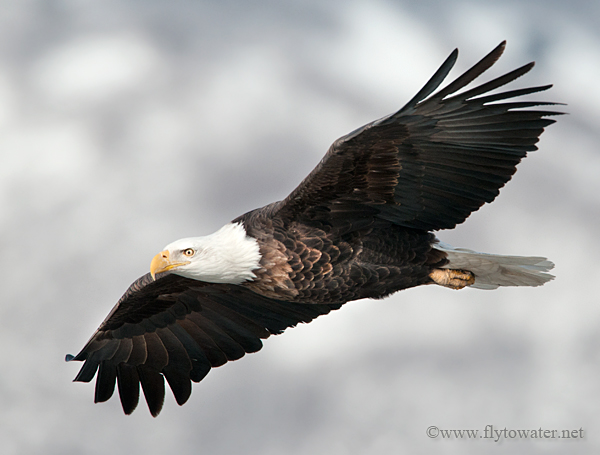
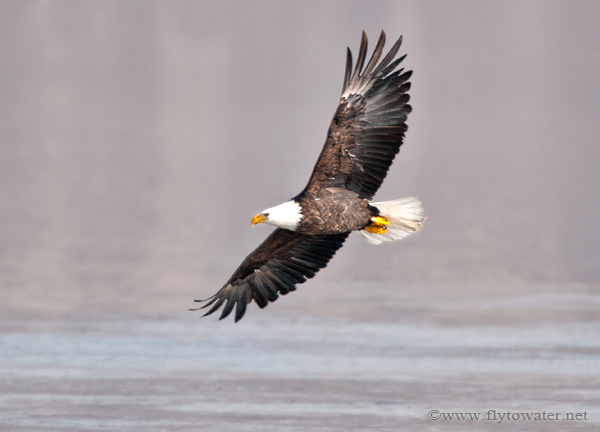
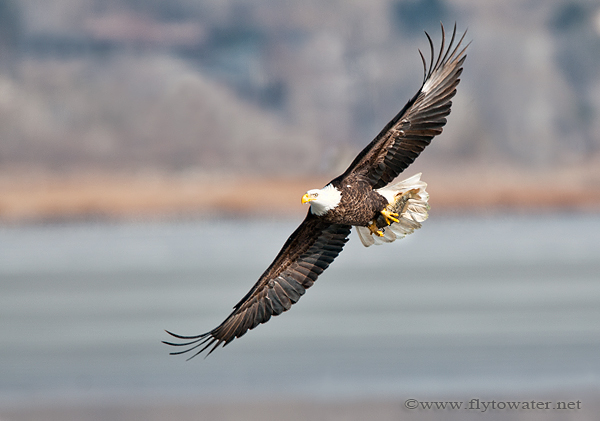
Whiteheaded Largebird

Have you ever been so cold that your reproductive regions could be preserved for cryogenic science with no additional cooling required?  One of the great things about wildlife photography is the way in which you can experience abject misery for extended periods of time.

Take this weekend, for example: I stood within 40 yards of a whole convocation of bald eagles for an interval so extensive that whole life cycles of insects were taking place around me. Eggs were laid. Larvae hatched. Eventually these were able to successfully pupate and emerge as sexually mature adults. Temperatures were well below freezing. During this veritable epoch, a vast expanse of fog settled upon the wetlands obliterating all hope of anything resembling a successful photograph.

The day ended.  Total clicks of the shutter: Zero.  This is the part of wildlife photography that isn't always apparent - the time that is allocated to pitiable failure and adult language.

Dawn the following day brought identical conditions.  After a few hours, however, a rapid change took place  and suddenly the air was clear.  Light rained down.  Eagles flew.  Birder's Remorse faded.  Shutters clicked.

Gear Down

Image Details
Nikon D4
Nikon TC17EII
Nikon 400mm f/2.8 VR @ f/4.8, 1/1600, ISO 100

Saturday, February 16, 2013

So Juvenile

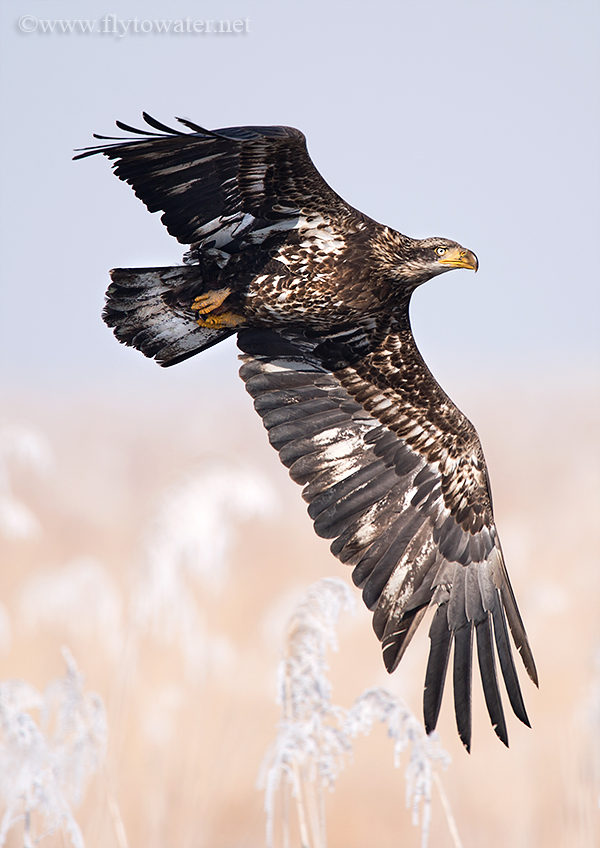
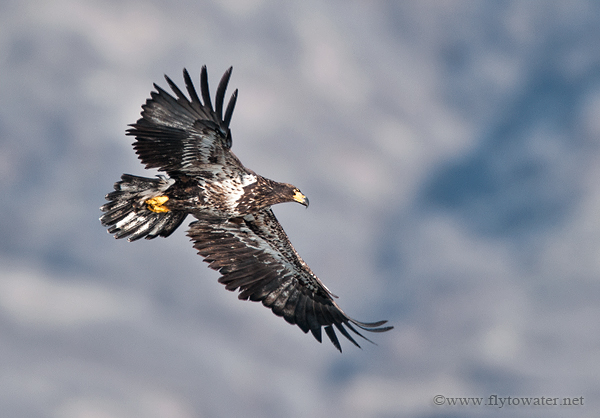
Juvenile bald eagles, a lot like their human counterparts, tend to be a pain in the butt.  Immature birds invariably have chips on their shoulders, and are always ready for a brawl.  Physically a young eagle will appear larger and more imposing than their older counterparts as they have longer flight feathers to help them learn the ropes of aviation.

Since their plumage (especially at the head) lacks the contrast of adults, juveniles are a significant challenge photographically.  Directional, soft light is needed to bring out sufficient detail in the eye to engage the viewer.

Baldies will generally attain their adult plumage sometime in their 5th year, and they are often mistaken for golden eagles during this color phase.

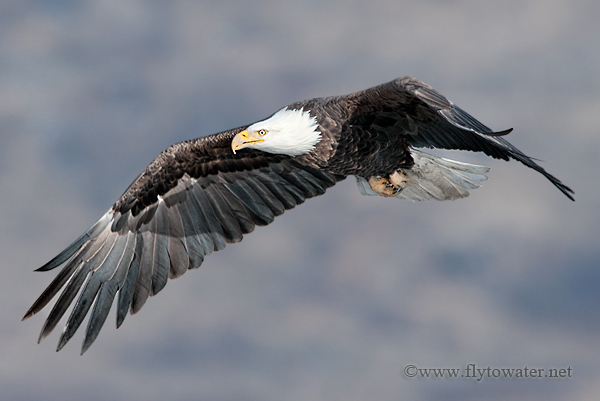
In the wake of numerous, unsuccessful attempts this year to get close enough to the eagles at the right time of day and in favorable light - it was very rewarding to click the shutter on this juvenile today:

Juvenile_Blog

Image Details
Nikon D4
Nikon TC17EII
Nikon 400mm f/2.8 @ f/4.8, 1/1600, ISO 100
Distance to Subject: Approx. 25 yards

Wednesday, February 9, 2011

Soar Spot

In large part I've been spending any and all spare daylight shivering uncontrollably in temperatures ranging from -20° F to a balmy 37°. Each year for a couple of weeks, a wave of migratory bald eagles passes through the wetlands surrounding the Great Salt Lake.

Inexplicably, even though I have repeatedly "learned my lesson," I continue to forsake my furnace and choose instead to lower my core body temperature to the threshold of hypothermia. Why? Several theories have been offered, but Mrs. FlytoWater's commentary on the subject is wildly inaccurate and notoriously lacking in substance. Like migratory instincts themselves, little is known about the motivations of fly fishermen or bird photographers. Collectively, we remain somewhat of a mystery.

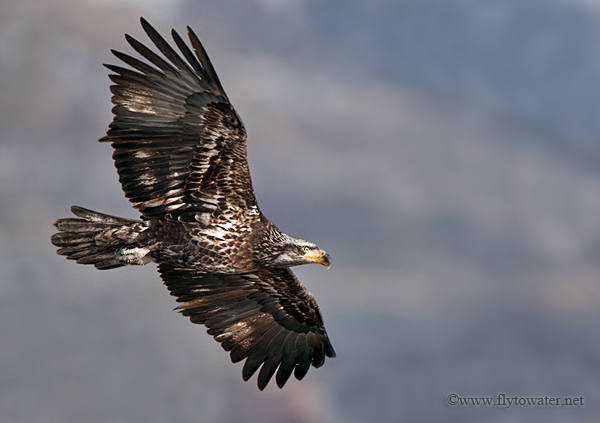
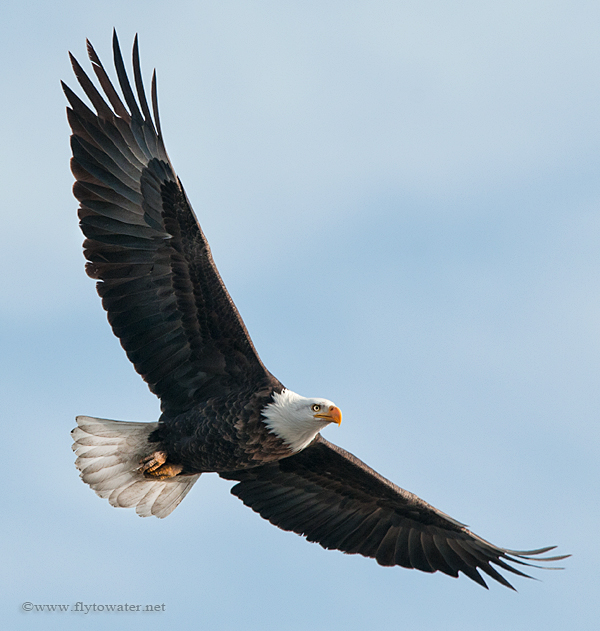
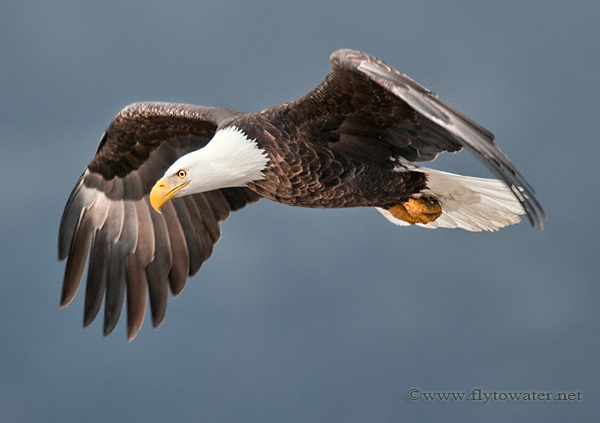
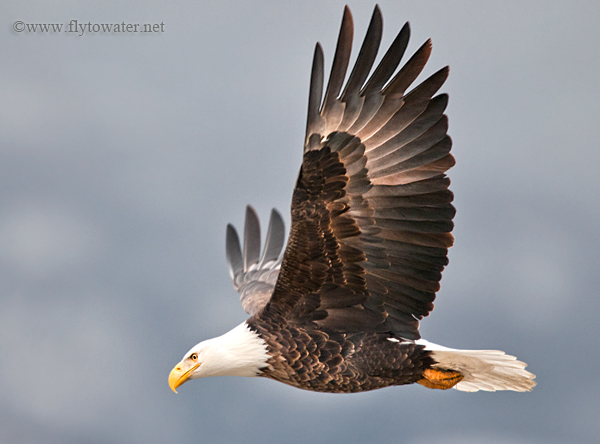
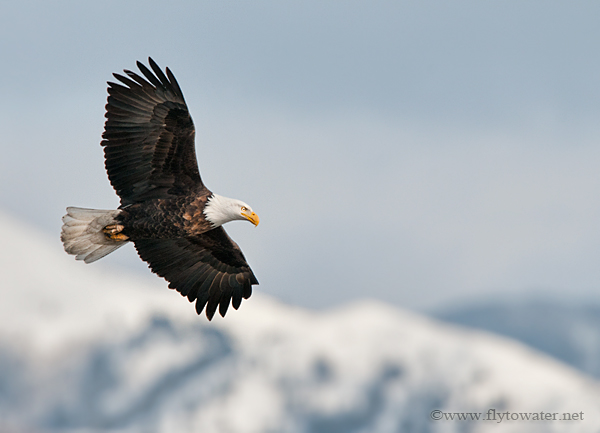
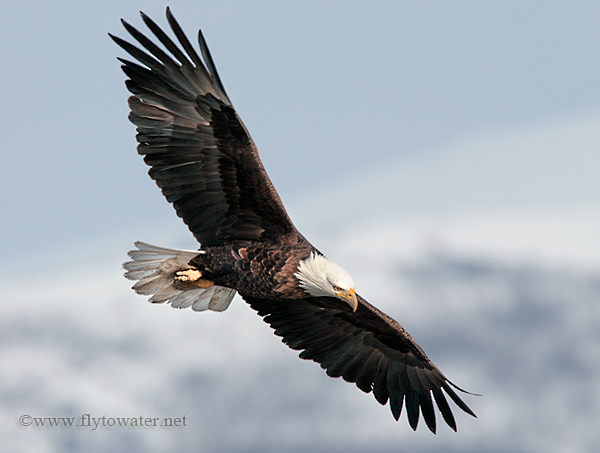
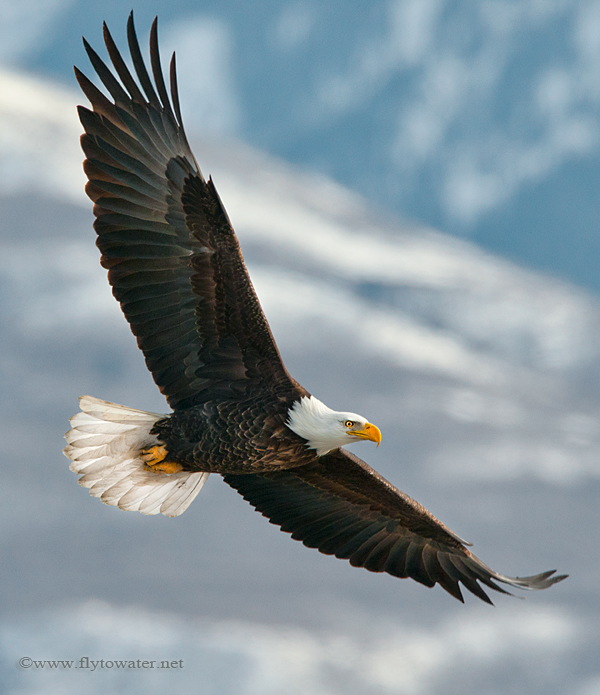
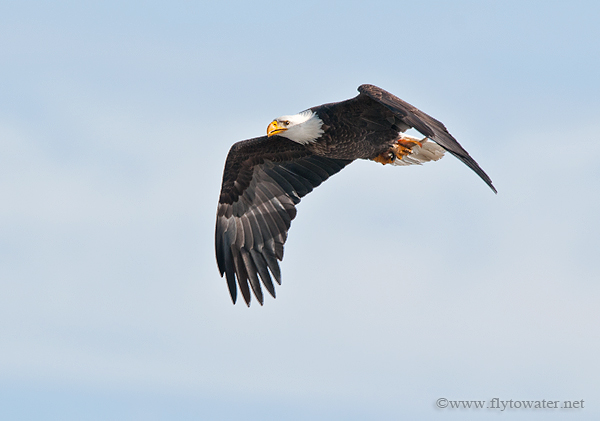
Prior to the intake of copious hot liquids, I will share a few images from the last couple of days. Eagles are fascinating raptors, commonly living into their late 20s (and occasionally as long as 30 years). Young eagles do not achieve their mature plumage until sometime in their 5th year. Juvenile baldies are commonly mistaken for golden eagles due to their mottled, brown plumage. The rare and fleeting close encounter with these majestic animals is always worth the many hours of waiting in the cold.

Diagonal

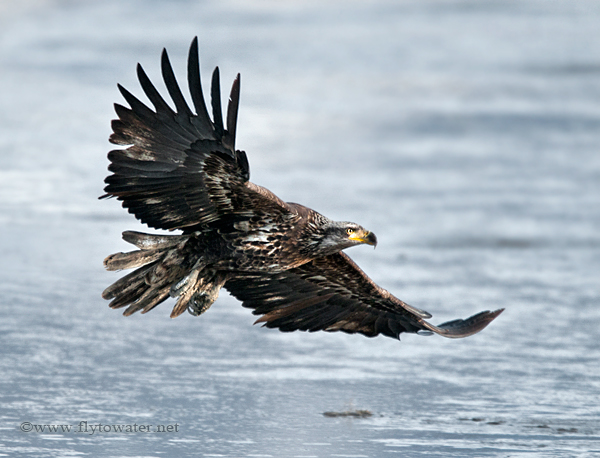
A juvenile bald eagle sporting the distinctive eye band "mask" they have in this age class:

Juvenile Swoop

Masked Juvenile

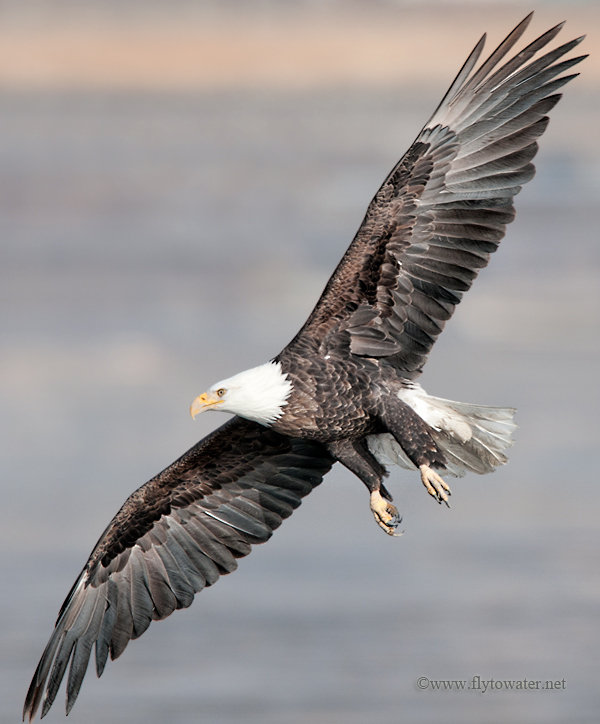
More mature plumage...

Soar Spot

Last Light Before the Storm

Bald Eagle Underwing

Eagle Mountain

Into The Light

Coming Fast

Looking Down

Banking On It

Sunday, January 23, 2011

Scouting

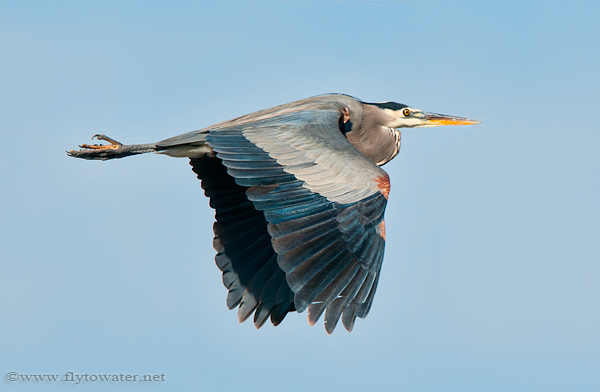
A few wisps of blue sky showed themselves occasionally this weekend, and I spent some time scouting locations for raptors. Aside from getting to watch a great blue heron spearing voles with amazing accuracy one evening after the light had faded, nothing noteworthy really took place.

Utah's Wasatch Front experiences a widespread temperature inversion during the winter. This phenomenon causes an enormous pollution cloud, even larger than the one emitted by Al Gore's personal residence, to hover over the valley.

Spending any time outdoors under these conditions is akin to huffing oxides of nitrogen directly from the exhaust pipe of a 1970 AMC Gremlin.

Occasionally a storm of sufficient strength blows through and sweeps the toxic atmosphere up into the jet stream, where it is often mistaken for Icelandic volcano ash and grounds all flights in France.

We experienced one such storm system late last week and had glorious, clean air for the weekend. It was nice just to be outside. I didn't get any images that I'd consider "keepers" but a few birds were in the air and I dusted off the shutter to get in the groove.

I'm hoping the next month or so brings some additional opportunities.

Bald Eagle Sight Fishing

Great Blue Heron in Flight

Bald Eagle with Carp Dinner

Immature Bald Eagle

Eagle Blue Sky