Monday, April 11, 2011

Telephoto Fishing Part Deux

OK, so you've mastered how to isolate your subject with the telephoto lens and create a nice, creamy background which focuses attention right where you want it.

Now we can move on to the second installment in our multi-part series entitled:

Part II - COMPRESSION

Photographers have the ability to distort perspective within the frame. Making focal length choices is not arbitrary, but has a very important impact on how the end result is presented to the viewer.

The perceived distances between the foreground, subject, and background are elements that can and should be consciously controlled.

Compression is the term for making distances appear shorter than they are in real life. Women have been doing this for eons even before photography was invented, but for our purposes we will discuss only the relative distances within an image. Long focal lengths are the visual equivalent of a trash compactor - effectively squeezing foreground, subject, and background elements together.

The sage brush behind well-known whitefish guide Casey Birkholz (below) was about 35 feet to the rear. Using a pontoon boat I created some distance and shot at 200mm, compressing the photo and making the background appear much closer.

CaseySepia

Even though almost half the frame in this shot is background, I did not want the viewer's eye to be drawn deeper into the image and beyond the subject. Use of compression made the distances appear artificially short, resulting in a more controlled portrait.

Perspective is a vital arrow in the quiver. Zoom lenses allow for a certain amount of laziness, because the photographer can stay in one place while zooming in or out to fill the frame. Doing so is a beginner's mistake! Distances and focal lengths CHANGE the resulting image dramatically. Make your focal length and compositional choices first, then move your body to accommodate the vision.

Ask not what your zoom can do for you, but what you can do with your zoom.

Thursday, April 7, 2011

Telephoto Fishing - Part I

Rod, reel, line, vest, chest/hip/backpack, leaders, tippets, fly boxes, flies, floatant, forceps, clippers, hook sharpener, leader straightener, net, waders, wading boots, wading belt, wading jacket, strike indicators, hip flask...

These are just a few of the things the average fly angler will festoon themselves with while out enjoying a day on the water. In order to avoid rolling around a humongous gear ball with our legs, like a dung beetle only on a much larger scale, fishermen often tend to economize in the camera department. Telephoto lenses taking up the same amount of space as a foot-long hoagie sandwich tend to get left at home.

I usually subscribe to this less-is-more approach myself. The telephoto lens (generally defined as a focal length greater than 100mm) does have a number of distinct advantages for fishing imagery.

Why sacrifice your 12" Meatball Marinara in favor of a tele? Backing away from the subject and shooting at longer focal lengths has some advantages. The key is to understand and visualize the types of images you hope to capture in advance, making it easier to pick the right tool for the job.

Part I - Bokeh, or Out of Focus Backgrounds

Isolation draws attention to the main subject of a photograph, which can be accomplished by rendering backgrounds that are smooth, soft, and not distracting to the viewer. One easy method to accomplish this is to simply back off, and shoot at 200mm or 300mm. Leave some distance between the subject and the background, and the result is great bokeh.


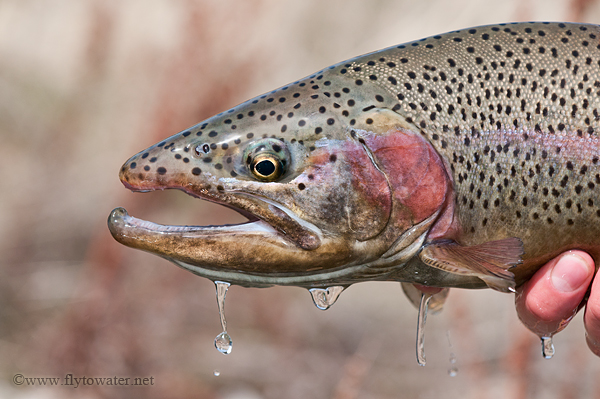
Dripping

This example was taken at f/5.6 and 200mm, allowing the trout and the water droplets to be the obvious center of attention.

Just because you can get close, doesn't always mean you should. Go long for this type of result.

Thursday, March 24, 2011

Eye of the Beer-Holder

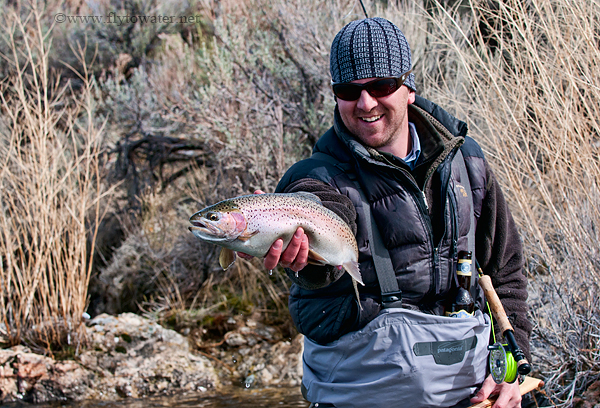
As a public service I am hereby raising awareness about in-wader beverage storage among the fly fishing community. The technique that is being demonstrated here by Worldcast guide Casey Birkholz presents the angler with a number of advantageous benefits.

Happiness: Note the gleeful and upbeat attitude permeating the countenance, and the complete absence of worldly concern. Casey is the epitome of wellness, which is being made possible by the ease of access to what he terms a "barley pop." The hen rainbow trout avoids direct eye contact in the hope that our angler will not become overly enthusiastic, and also place her in his waders by mistake.

Trout in Hand & Coors in the Waders

Safety: Crude systems such as the Beer Guzzler Hat violate considerable airspace above and to the sides of the fly angler. Obvious casting hazards are the unavoidable result as well as the heartbreak of backlash during a presentation. The added cranial load of a hat-based system will also increase stress on the neck and spine, resulting in a lack of fishing comfort. The risk of a hook-punctured can and the associated LOB, or Loss Of Beverage, is greatly reduced under the Birkholz Method. Notice how weight is evenly distributed by the wader harness in an ergonomic fashion.

Alert reader Frank Reid pointed out a few dangers that even I had not anticipated HERE. The follies of using a Camelbak® for carbonated liquids include:
  • Soft tissue injury resulting from over-pressurization of the closed contrivance, causing the end cap to become a projectile. It's all fun and games until someone loses an eye.
  • Getting turned into a "reverse taco" as the shoulder straps become the sportswear equivalent of a reticulated python.
  • Proptosis. This is the medical term for the abnormal displacement of the eyeballs, causing them to protrude unnaturally from the orbits, or eye sockets.
Hydration: Quick access to the longneck is the hallmark of a front-loading approach. Transport losses associated with the plastic tubing of other delivery systems are avoided, yet the ability to go hands-free is preserved. Astute fishermen will appreciate the elbow already forming a 90° angle when grasping the bottle, permitting immediate quenching of any thirst impulse. The bottom line: Minimal waste of motion and superior hydration - keeping the fisherman on the water longer.

Cooling: Arriving at a sufficient depth brings cooling waters into close contact with your beverage of choice, providing on-site refrigeration. The breathable wader membrane is able to keep the label dry during the chilling cycle, preventing the catastrophic loss of grip that is the downfall of coolers everywhere.

If this information helps just one angler, my post will not have been in vain. Bottoms up!

Friday, March 18, 2011

Open Water

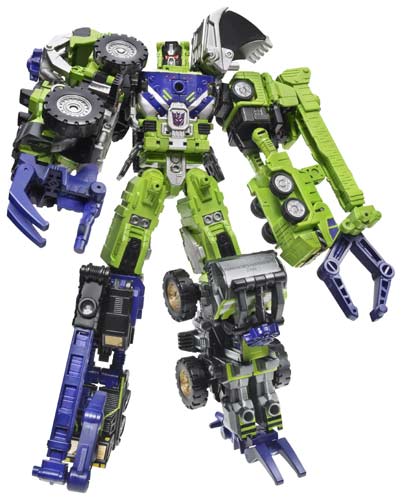
During my formative years I was a fan of Transformers. Among my all-time favorites were the Constructicons - a group of individual transformer vehicles that had the added benefit of being able to combine themselves into one giant robot: Devastator.

There was great anticipation and excitement whenever a birthday or Christmas would roll around because a new Constructicon was always a distinct possibility.

Today the only thing that rivals the unbridled enthusiasm I experienced as a kid is Spring's banishment of ice-holes. I believe it was Lewis Carroll who wrote:

Beware the Ratfinky my son!
The jigs that bite, the spoons that snatch!
Beware the vexilar flashers, and shun
The waxworm-baited catch!

I am paraphrasing, of course, but it was something to that effect. There is nothing quite like the year's first stillwater outing. Upon arrival, you peel off 80 feet of line into your stripping basket. After a few pleasant false casts, a double-haul builds line speed and you feel the rod load... only to unleash Hell's own line bastard! Your sinking lines haven't been used all winter and now have more memory than a scorned spouse.

I tend to be far too giddy about throwing the first soft water loops of the year to bother with taking photos. It felt great to feel some aggressive takes this week as rainbows targeted crayfish in the shallows. Some of the strikes were remarkably close to shore and highly visual. I did pause briefly to catalog this trip's typical rod bender:

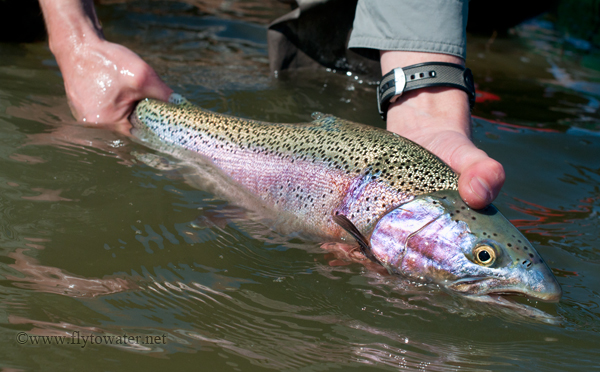
Spring Stillwater Rainbow

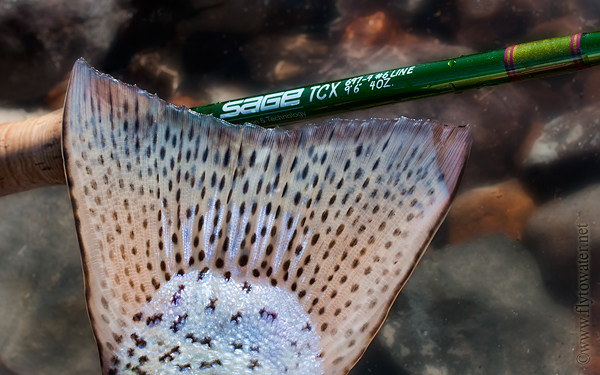
I also enjoyed hucking what has become one of my 2 favorite stillwater rods: The Sage TCX 697-4. Having some extra length at 9-foot 6-inches gives me additional punch for the frequently windy conditions on lakes and impoundments across the West. The TCX has a softer tip than the previous TCR, providing more control, but does not seem to sacrifice anything in the way of distance. The color of the blank is just outstanding too, especially in direct sunlight. The other go-to stick in this category is the Sage Z-Axis 796-4, which adds backbone for bigger fish.

TCX & Rainbow Caudal Fin

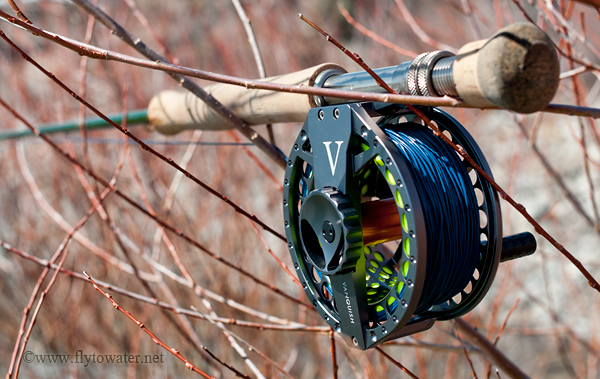
Attached to the TCX on this trip was the Lamson Vanquish 7/8LT - which continues to be a really impressive piece of hardware. Even though the drag system in the lighter version of the Vanquish is not quite as robust as big brother's, I would not hesitate to choose this option for bonefish, snook, or baby tarpon to save wear and tear on the casting arm.

If you haven't seen my review of the 7/8LT, I have product photography and additional thoughts here: LAMSON VANQUISH REVIEW

Sage TCX & Lamson Vanquish 7/8

This weekend will find me chasing more rainbows - although I'm guessing I will be on the stick more often than behind the lens once again. I hope to see a few of you on the water.

Monday, March 7, 2011

Spring?

Robert Frost, in a poem about Spring, spoke of ice as being the "Crystal teeth of the lurking frost in the earth beneath."

Winter is a torturous time for a stillwater junkie in the Rockies. At long last, however, Mother Nature is now teasing us with elusive signs of a thaw.

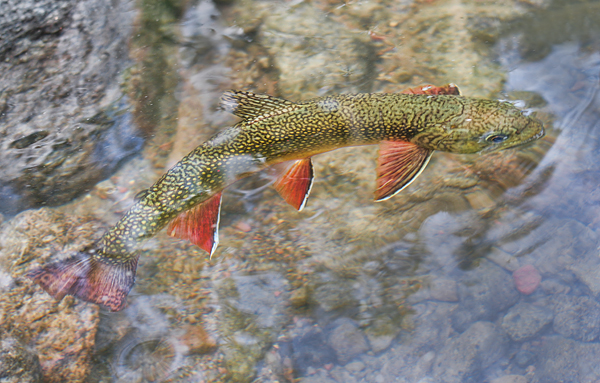
Brook Trout Rising

Time for some rod bend this weekend. Who's getting out?

Monday, February 14, 2011

Girls Girls Girls

Girls rock.

Hens Rock!

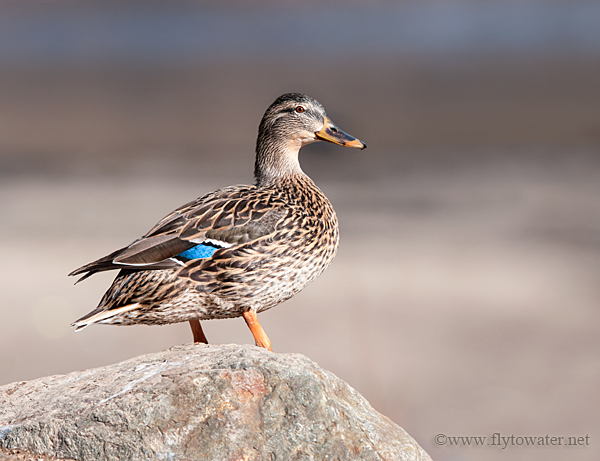
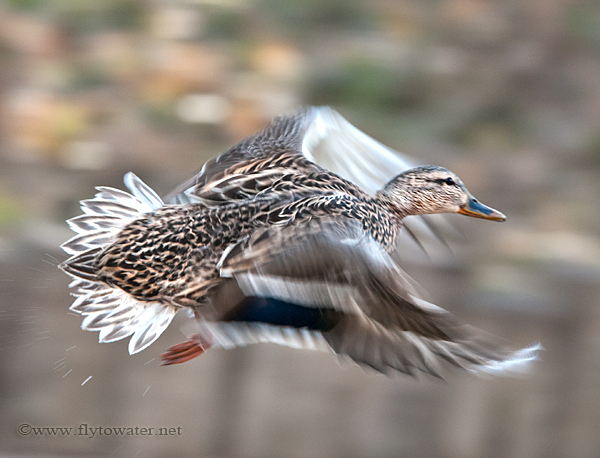
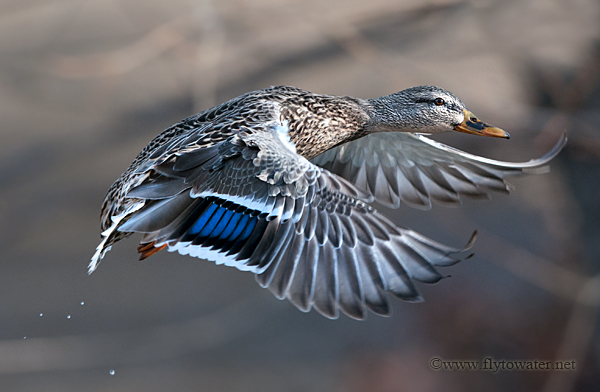
Females that is - or in this case hen mallards. In the world of waterfowl, it seems as though the males of the species seem to have been universally endowed with all the gaudy colors and ostentatious iridescence that nature can bestow.

I admit to harboring a penchant for the ladies, however. Smaller overall weight and less muscle mass makes for more fluid shapes, graceful lines, and light movements. Hens are where it's at. Who's with me?

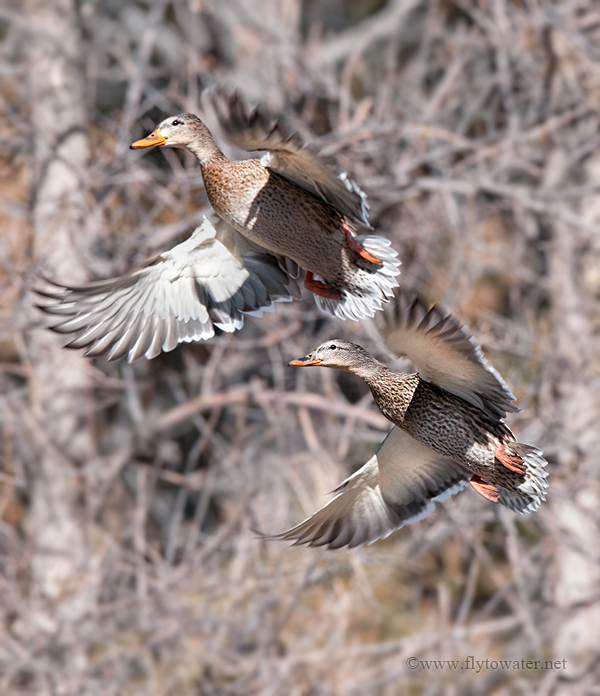
Girls Light Out

Mallard Hen Wing Blur

Mallard Hen in Flight - Droplets

Wednesday, February 9, 2011

Soar Spot

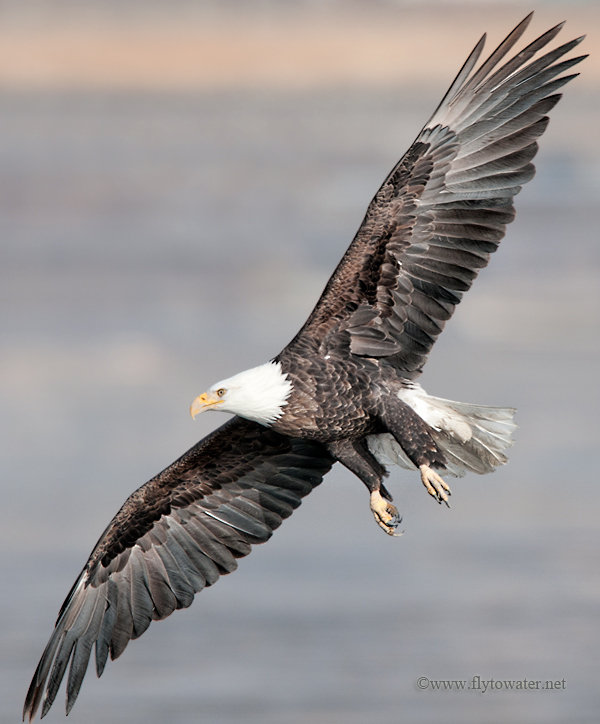
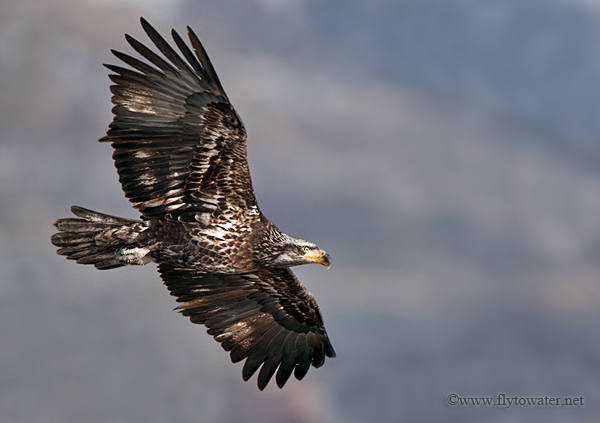
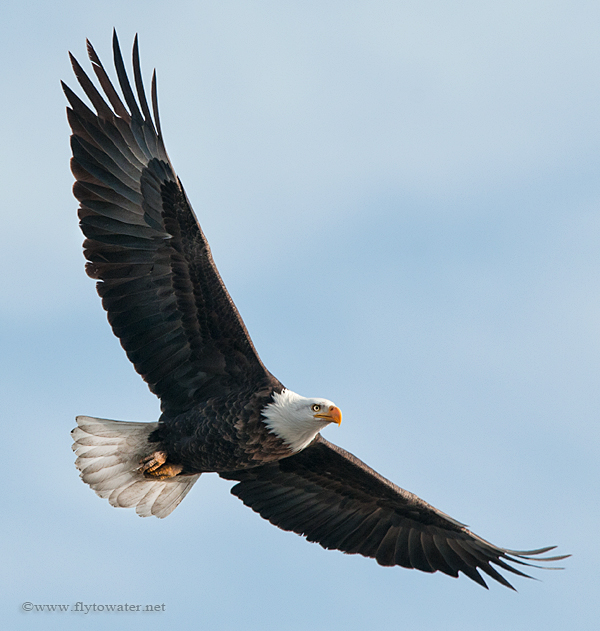
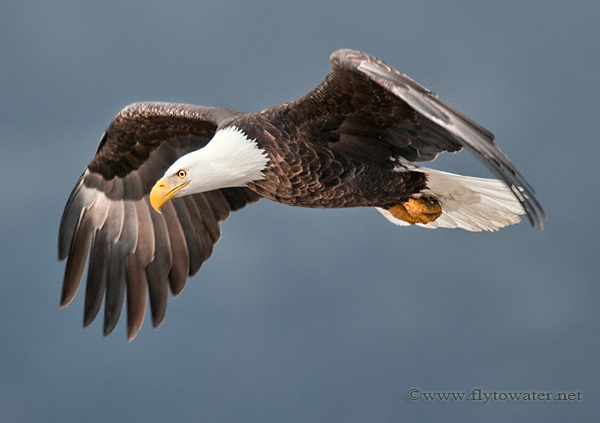
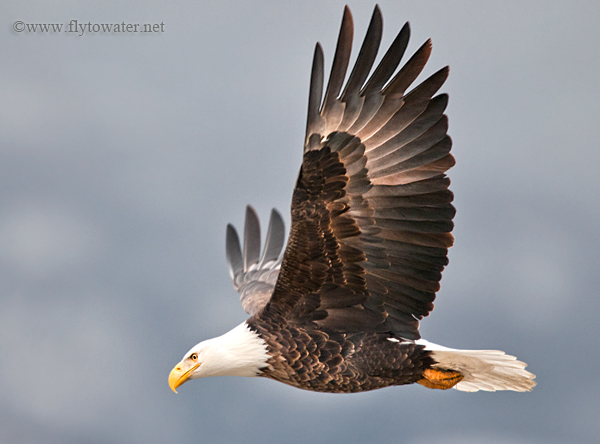
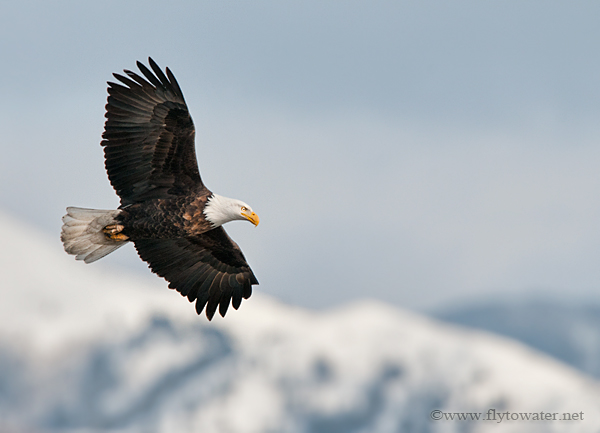
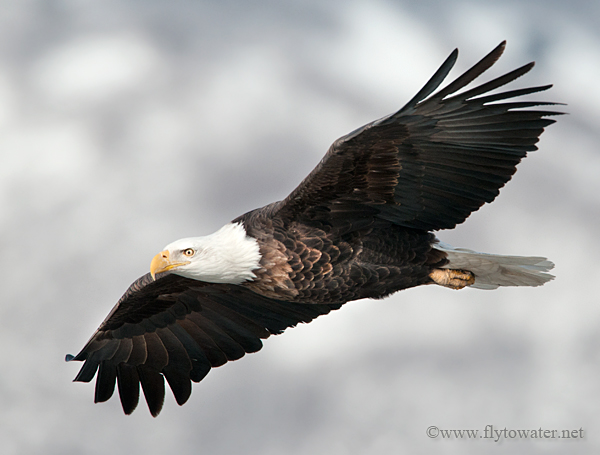
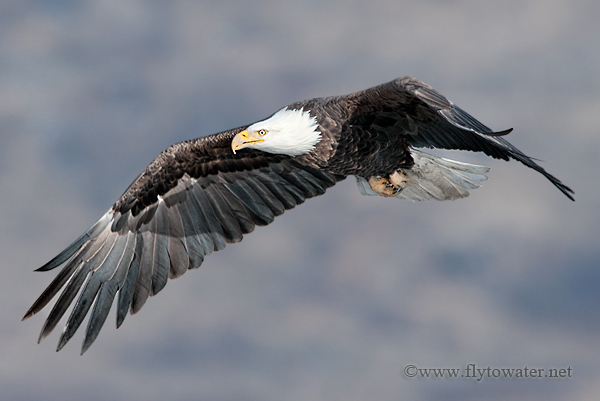
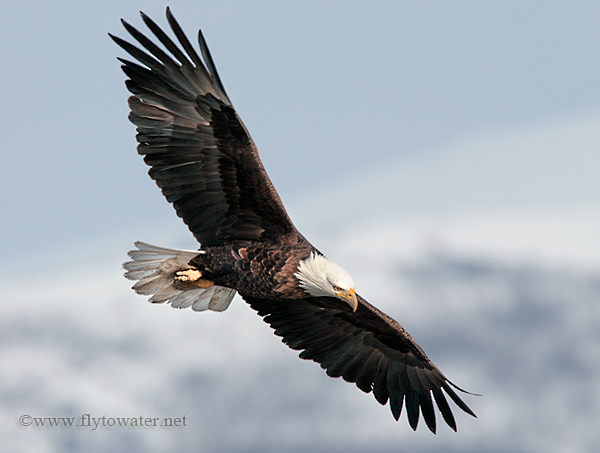
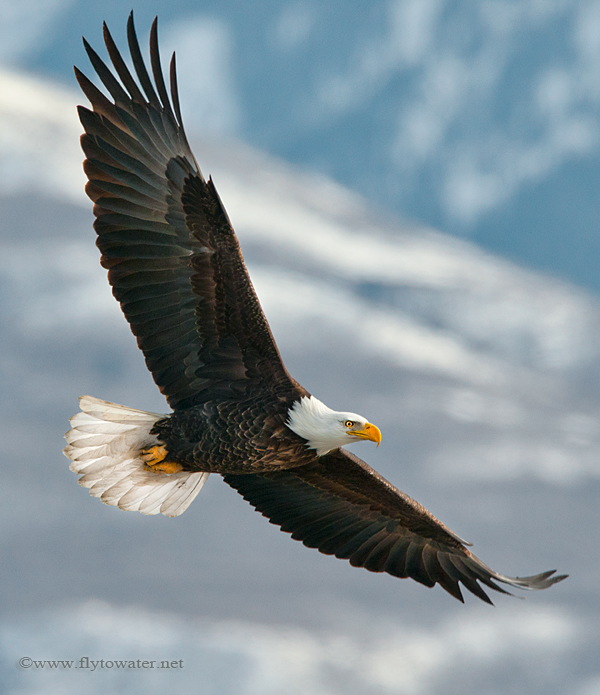
In large part I've been spending any and all spare daylight shivering uncontrollably in temperatures ranging from -20° F to a balmy 37°. Each year for a couple of weeks, a wave of migratory bald eagles passes through the wetlands surrounding the Great Salt Lake.

Inexplicably, even though I have repeatedly "learned my lesson," I continue to forsake my furnace and choose instead to lower my core body temperature to the threshold of hypothermia. Why? Several theories have been offered, but Mrs. FlytoWater's commentary on the subject is wildly inaccurate and notoriously lacking in substance. Like migratory instincts themselves, little is known about the motivations of fly fishermen or bird photographers. Collectively, we remain somewhat of a mystery.

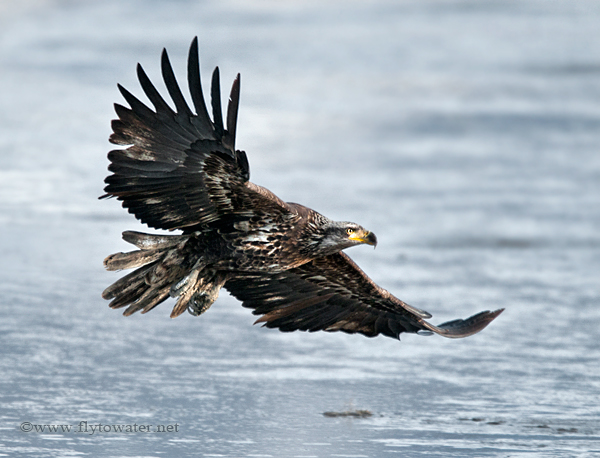
Prior to the intake of copious hot liquids, I will share a few images from the last couple of days. Eagles are fascinating raptors, commonly living into their late 20s (and occasionally as long as 30 years). Young eagles do not achieve their mature plumage until sometime in their 5th year. Juvenile baldies are commonly mistaken for golden eagles due to their mottled, brown plumage. The rare and fleeting close encounter with these majestic animals is always worth the many hours of waiting in the cold.

Diagonal

A juvenile bald eagle sporting the distinctive eye band "mask" they have in this age class:

Juvenile Swoop

Masked Juvenile

More mature plumage...

Soar Spot

Last Light Before the Storm

Bald Eagle Underwing

Eagle Mountain

Into The Light

Coming Fast

Looking Down

Banking On It