Showing posts with label Waterfowl. Show all posts

Monday, December 26, 2011

The Eyes Have It

"Look at me when I'm talking to you!"

If you are a guy of they XY chromosome persuasion, chances are you have had this type of exclamatory remark flung in your direction. Due to a vast conspiracy between extroverts and chick flick producers, eye contact became an important, non-verbal communication element at some point in history.

While information technology professionals have been fighting this alarming and intrusive trend for decades via non-violent, downward gazing - such efforts have done little to stop the insanity.

Looking into the eyes establishes a connection.  Similar body language is evident even in animals, where the direction of a stare or glance can have much deeper social meaning. 

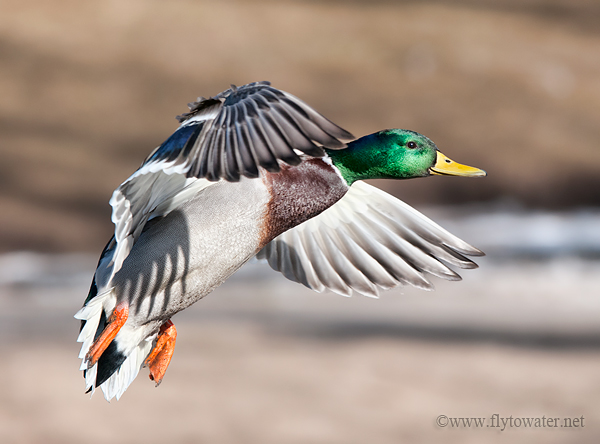
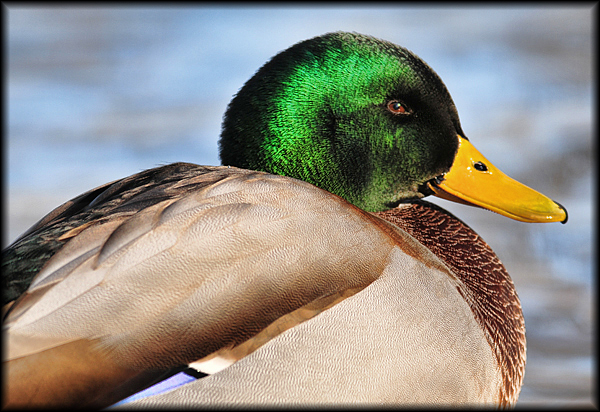
In wildlife photography, creating a linkage between the viewer and the image is paramount.  Eyes are a critical component of the subject in this regard.  Aside from intentional, artistic abstractions - successful images must capture the eye in sharp focus and without motion blur.  This remains true regardless of distance and whether you are capturing a tight shot or broader environmental portrait.

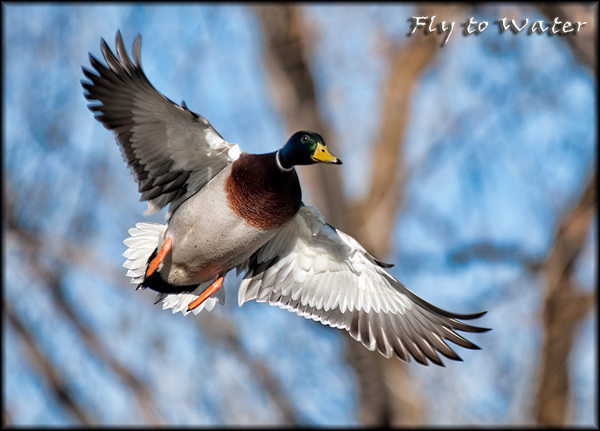
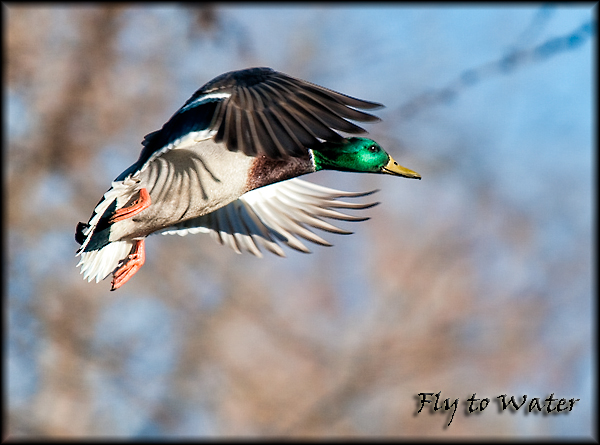
Mallard Drake Glide Path

It can be Hell's own fun tracking focus on the eye of a fast-moving bird while experiencing a fit of the galloping shivers.  It's a perishable skill that takes practice.  If you're looking to improve your technique, my suggestion is to find a location with a lot of mid-sized birds like seagulls which tend to congregate in groups and fly around in circular patterns.  Use the same gear you take into the field, and rehearse focusing on the eye.  You might get some odd looks bombing photos of gulls, but it's a small price to pay to avoid the opprobrium of eye blur when it counts.

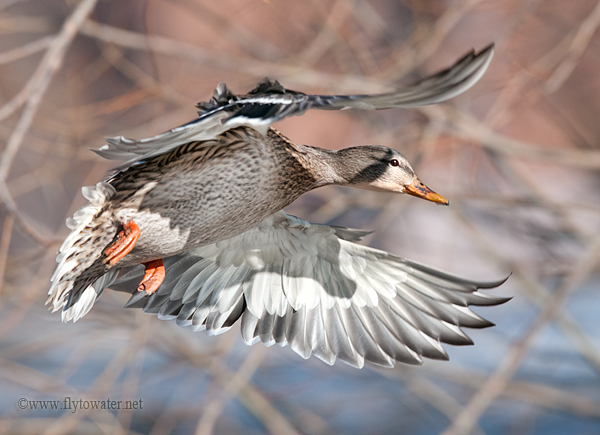
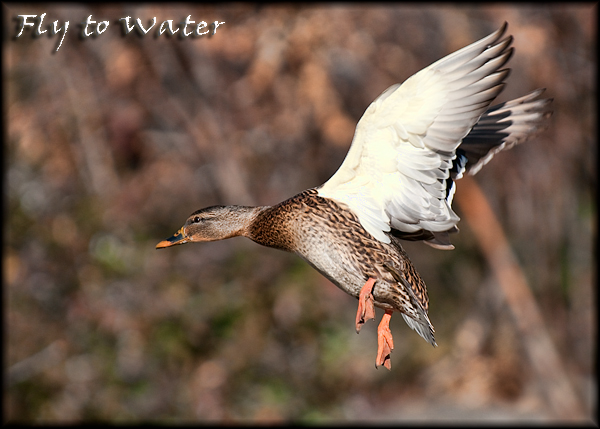
Mallard Hen on the Wing

Don't settle, like Kate Hudson did for Chris Robinson.  If your intent is not an abstraction of some kind - the eye simply needs to be sharp.  Make sure not to confuse missed focus with motion blur caused by a shutter speed which is too slow.  Waterfowl will usually have some wing blur at 1/1250, with action freezing well at 1/1600.  As a starting point select the camera's shutter priority mode on one of these two settings and adjust as conditions require.

Happy Holidays - and thanks for reading during 2011!  I wish everyone a fantastic New Year.

Nikon D300
Nikon 400mm f/2.8 VR - f/5.6, 1/1600 (8x Optical Magnification) - Hand Held
ISO 400
Distance to Subjects: 20 yards/60 Feet

Monday, November 28, 2011

Preening

Preen - transitive verb
  1. To dress or smooth oneself - to primp.
  2. To groom
  3. A tactic used by the female in a dating arrangement to grievously delay commencement of an evening's planned activities - to lag.
OK, so #3 isn't verbatim from the dictionary - but it falls within the bounds of literary license.

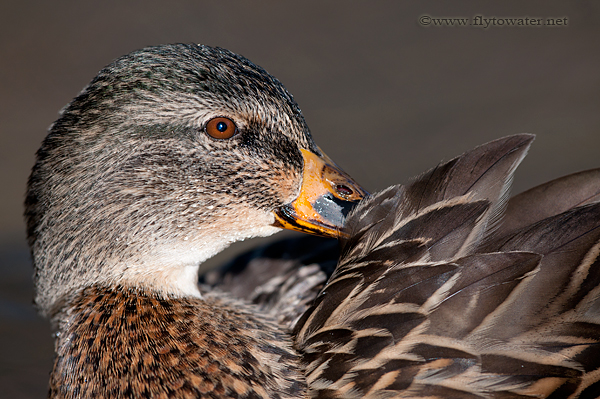
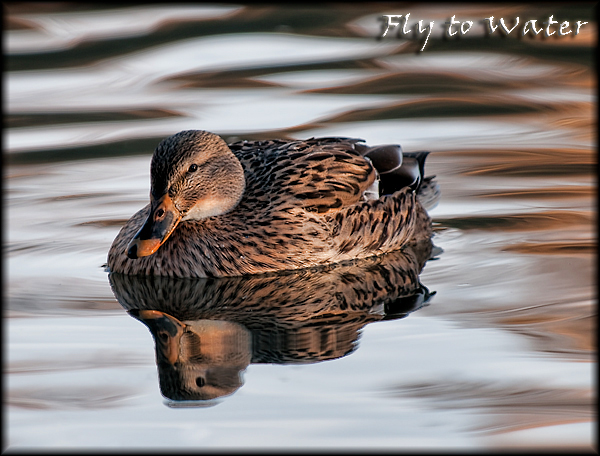
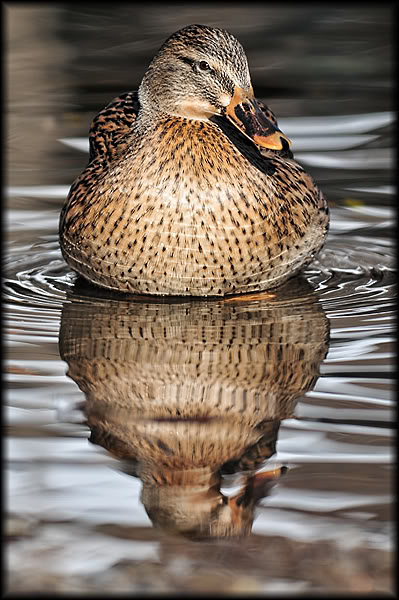
I couldn't help but notice in the process of capturing this image of a preening mallard hen that a rather impatient-looking drake was paddling back and forth a short distance away.  In the land of ducks, he was essentially in the formal entry checking his watch every 30 seconds because his reservations at the corn field clear across town were in 10 minutes.  Of course he had shown up half an hour earlier at the agreed upon time, but had failed to take into account that preening can only begin upon his arrival.  Few things, after all, are more deflating to a lady than a stale preen job.

Preening Hen

I was fortunate to have this hen swim very near to me during a window of wonderful light on Saturday.  The distance to her from the end of my camera lens was perhaps 6 feet.  Shooting at 8x optical magnification, what you see here filled the frame.

After she was all primped:

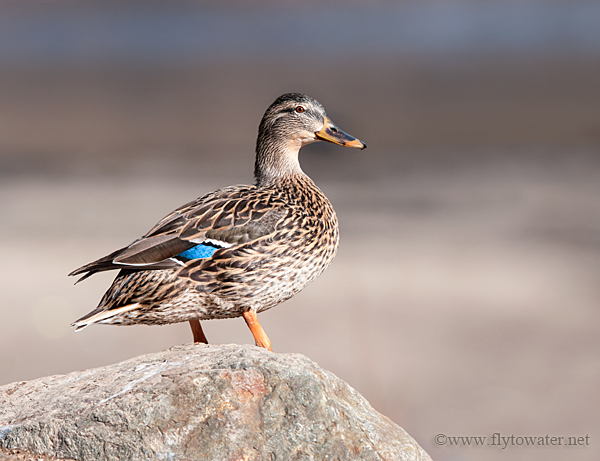
Hen Mallard

Monday, February 14, 2011

Girls Girls Girls

Girls rock.

Hens Rock!

Females that is - or in this case hen mallards. In the world of waterfowl, it seems as though the males of the species seem to have been universally endowed with all the gaudy colors and ostentatious iridescence that nature can bestow.

I admit to harboring a penchant for the ladies, however. Smaller overall weight and less muscle mass makes for more fluid shapes, graceful lines, and light movements. Hens are where it's at. Who's with me?

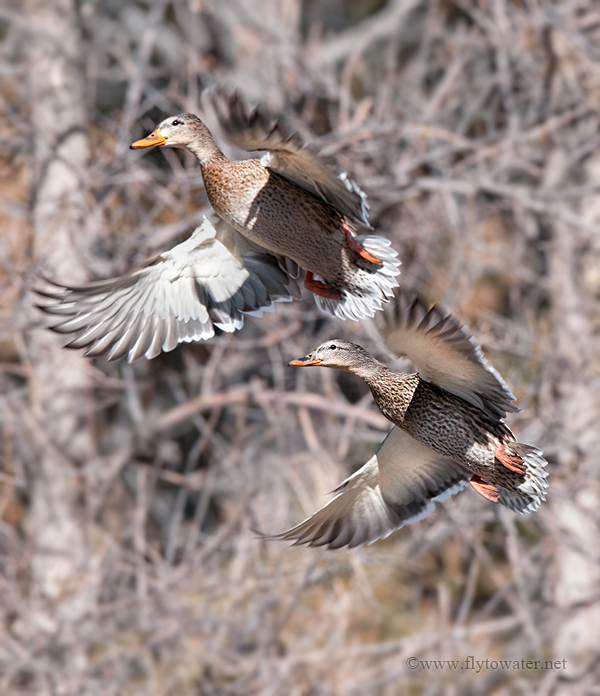
Girls Light Out

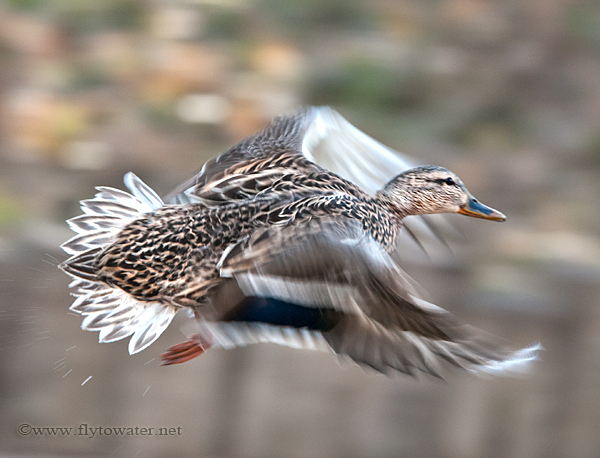
Mallard Hen Wing Blur

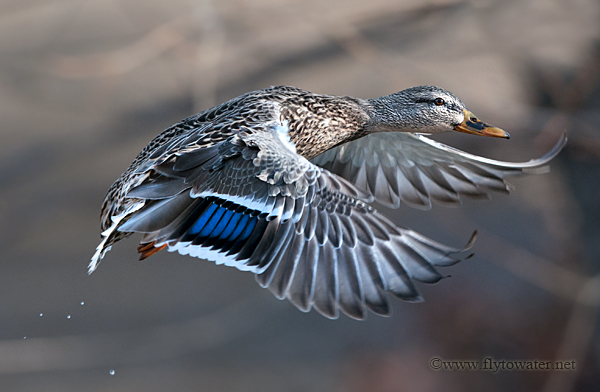
Mallard Hen in Flight - Droplets

Sunday, November 22, 2009

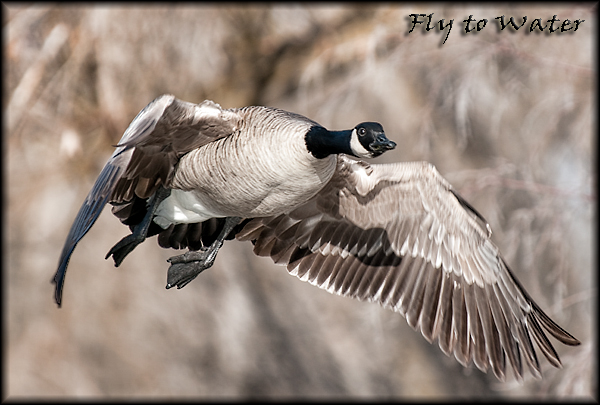
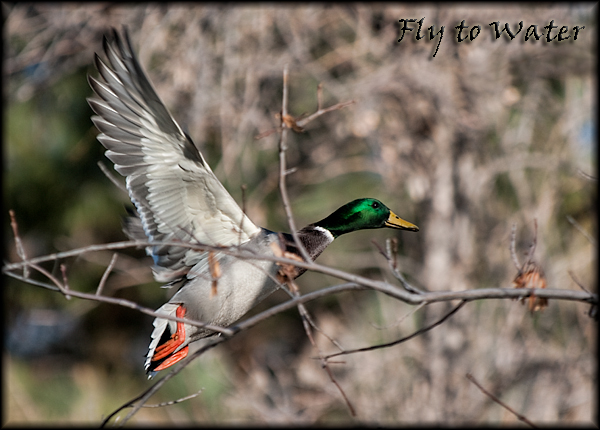
Wild Wings

If you've never tried to photograph waterfowl in flight it is likely that bliss, melodious laughter, and decadent high-living are far more common occurrences than facial spasms in daily life.

The objective this weekend was to capture a few airborne acrobatics. Execution is something of a symphony, requiring just-right lighting (not too much, not too little), planning, and a high degree of familiarity with your camera controls.

Even with all of the above, the likely result is still an Epic Fail. Still, once in a while, Ghostrider requests a fly-by.

Drake Flare

Inbound

Hen Drop

Cupped

Wings Extended

While keeping watch on the skies, don't forget to look down once in a while either. Marshes can produce outstanding reflections if you get low to the water and seek the right angles.

Hen Sunrise

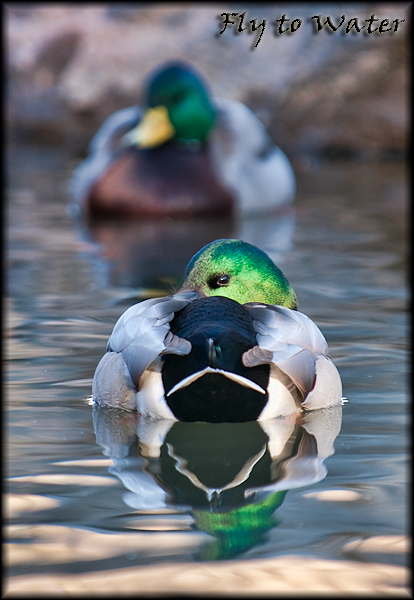
Mirrored Drake

Suspicion

That's my swan song for the weekend. JayMorr rocked the D700 on the trip, so check his blog sometime soon for his newest uploads.

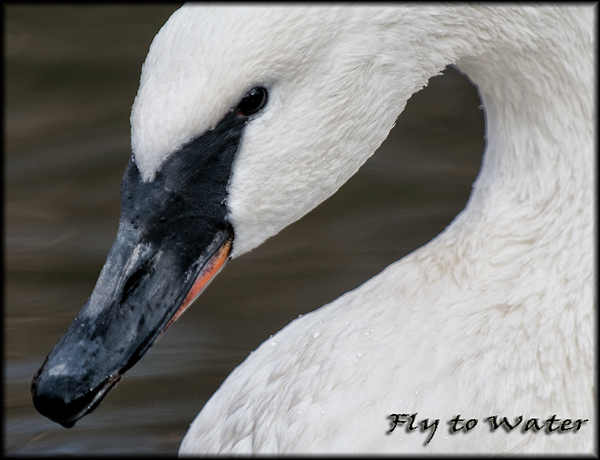
Swan Portrait

Saturday, November 21, 2009

Goosed

Wild Canadian geese rank second all-time (behind only the chukar partridge) in their ability to confound the wives of men.

"You're going to wade through a festering marsh in temperatures cold enough to freeze the balls off a brass monkey for the slim chance of seeing a goose?"

The question is not entirely unreasonable. Incidentally eye rolling so extreme that whiplash becomes likely is highly unbecoming of a lady.

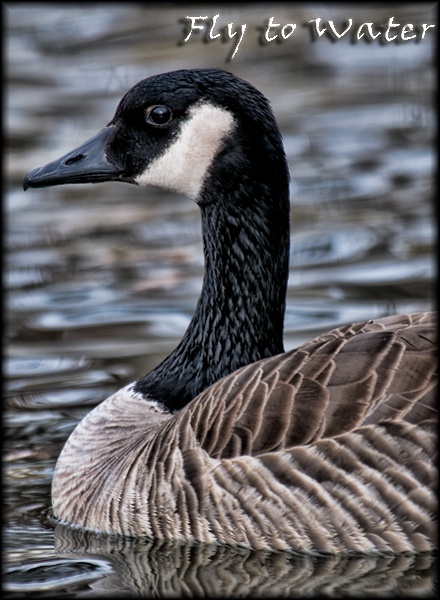
This morning a short window of gorgeous light opened up for a moment, and I captured the portrait I was looking for.

Canadian Goose Portrait

JayMorr got some shots of the inbound birds in flight - drop in for a closer look.

Tuesday, November 17, 2009

Fowl Intentions

If boredom ever sets in before dawn when temperatures hover around 15 degrees, I recommend finding a metal cylinder and clutching it with blue fingers to stave off the tedium.

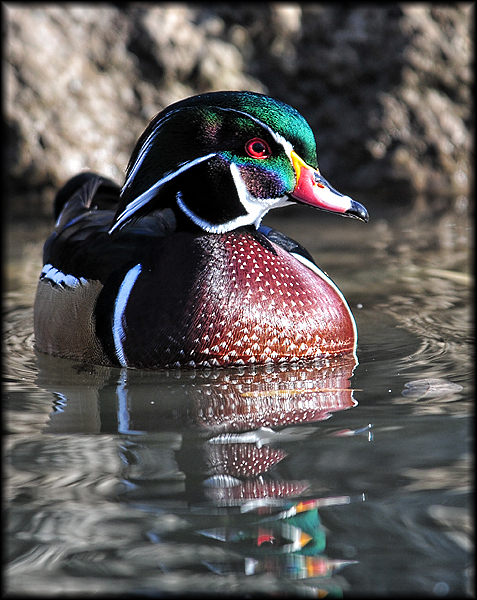
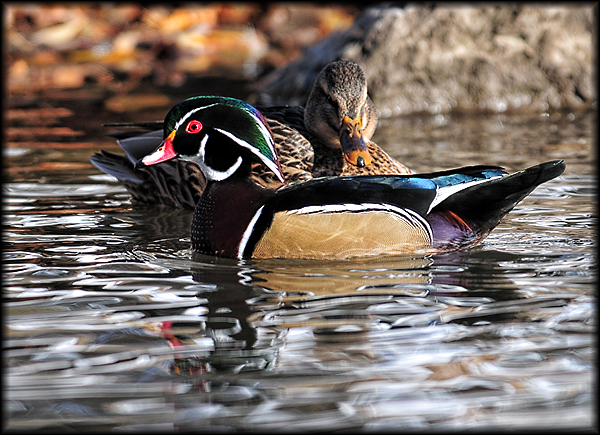
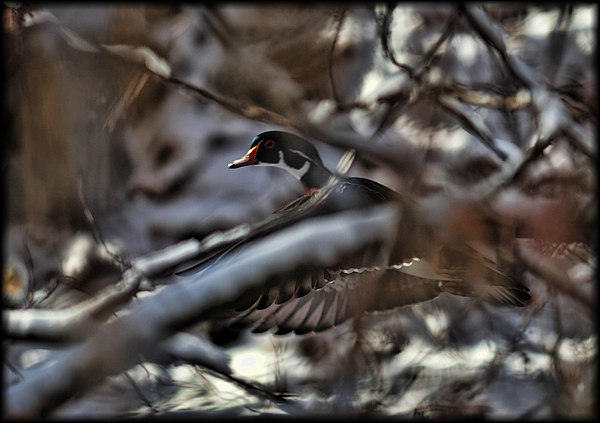
Finding wild wood ducks in Utah is a little like looking for Manhattan-style chowder in Boston. This weekend I decided to scout a timber patch up North where I have seen a few previously, and asked JayMorr if he was interested in loss of feeling in his extremities.

It took a lot of patience but a few opportunities presented themselves. We found mallards in great supply, and got lenses on a few drake woodies.

Drake Woodie Headon

Wrong Hen!

Drake Wood Duck

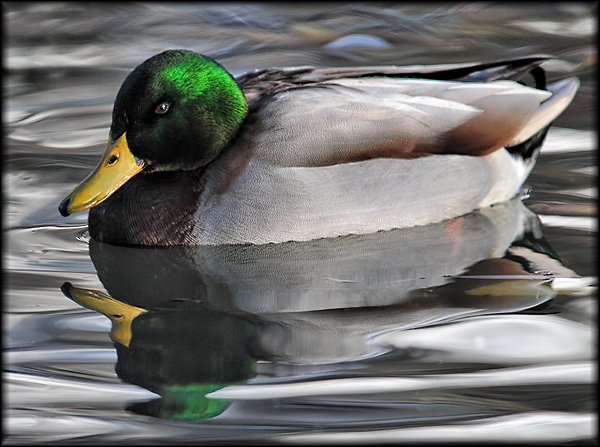
Mallards, while common, are beautiful birds when you get a close look.

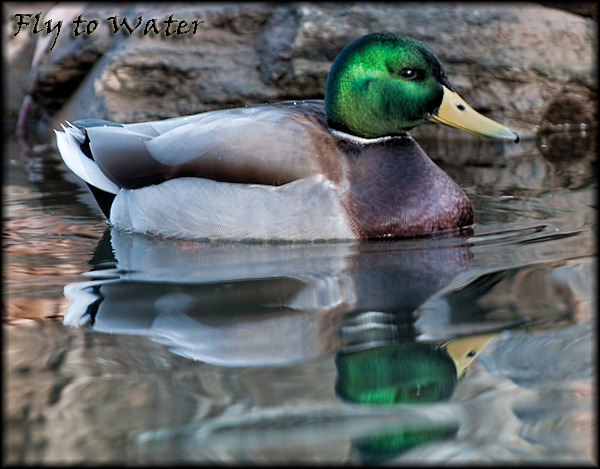
Drake Profile

Peekin'

Troubled Waters

Conditions were right for some nice reflections. I thought the tones in this hen mallard's plumage made for great contrast:

Henflection

Check out Jay's Blog for more images, including some shots of a drake wood duck in flight.

Wednesday, January 28, 2009

Bird Photography Made Easy

Why is that when viewing an excellent painting you never hear someone say, “The artist who made this must have had one sweet set of brushes”? You also never run into people who go out and purchase the most expensive brush set available, made from the belly hairs of unborn civet cats, who fully expect to paint a masterpiece simply because they own the best tools for the job.

About 9 times out of 10 when a great photograph is seen I hear comments such as “The guy who took this must have had one Hell of a zoom” or “It’s amazing what you can do with a $5000 camera.” There are also a slew of individuals who believe that if they throw down the kind of money that buys a black market kidney, fantastic photos will distill upon them like morning dew upon the lily.

The secret to capturing a great image lies with the photographer and not the equipment. The right tools, however, do make the job easier as well as provide for more consistent success. Now the question, what do you “need” to get started in wild bird photography?

Technique
It turns out that the main challenge in photographing birds is not saving up for the Dirk Diggler of telephoto lenses or the latest and greatest camera body. The trouble is simply getting cozy enough. Distance is the most significant technical obstacle that must be overcome. I have owned, borrowed, or sold my body to the night for some very large lenses over the years and what never ceases to surprise me is exactly how close they DON’T get you to birds.

You need to close the distance to about 25 yards to get good quality photos with most lenses. How can this be done? One method is the blitzkrieg, which I observed taking place this past weekend. Upon seeing a resting raptor, an aspiring National Geographic type jumped in his Honda Accord and raced in using a controlled 4-wheel drift in the hopes of getting off a one-handed shot of the bird’s rectum as it fled the scene.

The blitzkrieg offers the excitement of drifting, but fails to deliver results. The easiest solution to the problem is frankly to scout out places birds WANT to be, and then go there and wait. Roosts, resting perches, areas of open water where prey animals are likely to be, or routes to/from such places are your best bets.

Take an initial trip with a good pair of binoculars and locate spots the birds are using. Later, go to those places and be as unobtrusive as possible.

Remember that skittish animals like raptors are often less frightened of vehicles than argyle-clad primates of indeterminate species. If possible, remain in your vehicle. If not, conceal yourself as best as you can. Birds can see color and have excellent eyesight, so pay attention to detail.

Equipment: The Bad News
Birds enjoy appearing as tiny black flecks fleeing wildly into the distance in photos. Camera companies like Nikon and Canon happily provide giant zoom lenses costing from $5000 to $10,000 and beyond in order to aid wildlife photographers in overcoming this proclivity.

To get quality results, you should use lenses with a minimum focal length of 300mm, with 400mm being better, and 500+mm preferred. For still images, the aperture size of the lens is less important. If you want to capture birds in flight, however, a shutter speed of 1/1250 is all but required. Usually this is the territory of the SLR, or single-lens reflex camera. High shutter speeds, especially in less than ideal lighting conditions, typically necessitate aperture sizes of f/4.8 or larger. Sounds expensive, right?

Equipment: The Good News
Digital SLR bodies rapidly depreciate as new models become available. Models such as the excellent Nikon D70 and D70s, for example, can be found slightly used these days for about $300. That is less than the price of many point-and-shoots.

If you have the SLR, what lens should you pick? My favorite is the 300mm f/2.8, coupled with a 1.7x teleconverter because it delivers a 510mm f/4.8 and can still be reasonably hand held. Lightweight and affordable options are the Canon 100-400mm IS and the Nikon 80-400mm VR, which both have a maximum aperture of f/5.6 @ 400mm. These are good choices when there is plenty of light.

Then come the "boomsticks." Canon and Nikon both offer 400mm f/2.8, 500mm f/4, and 600mm f/4 options, all of which are roughly the size of the Hubble Space Telescope. These lenses all cost upwards of $7000, so what’s the good news? You don’t have to own them. Local places like Pictureline (http://www.pictureline.com/) or online resources such as http://www.lensrentals.com/ allow you to rent high-end lenses. Professional caliber gear like the 300mm f/2.8 are available anywhere from $38 to $60 per day.

In other words, there are plenty of ways to access the best tools if you want them. Master getting close and you can get by with what you’ve got.

Practice!
In the field, it really helps to be familiar with your camera equipment and the settings needed to get good results. Visit the Tracy Aviary (http://www.tracyaviary.org/) or any number of municipal parks like the Layton Commons Park where birds and waterfowl congregate and are semi-tame. You can get excellent results at these locations and improve your chances at success in the wild.

To Bird, or not to Bird?
Wild bird photography consists of hours of boredom interspersed with moments fleeting opportunity. It is important to go into the process with realistic expectations. Normally you are fortunate if you spend a half day in the field and come away with 1 or 2 nice images. If you enjoy challenges and have the self-deprecating nature needed to tolerate repeated failures punctuated by a small number of wins then get out and click the shutter. Thanks for reading!